
Last updated November 25, 2026
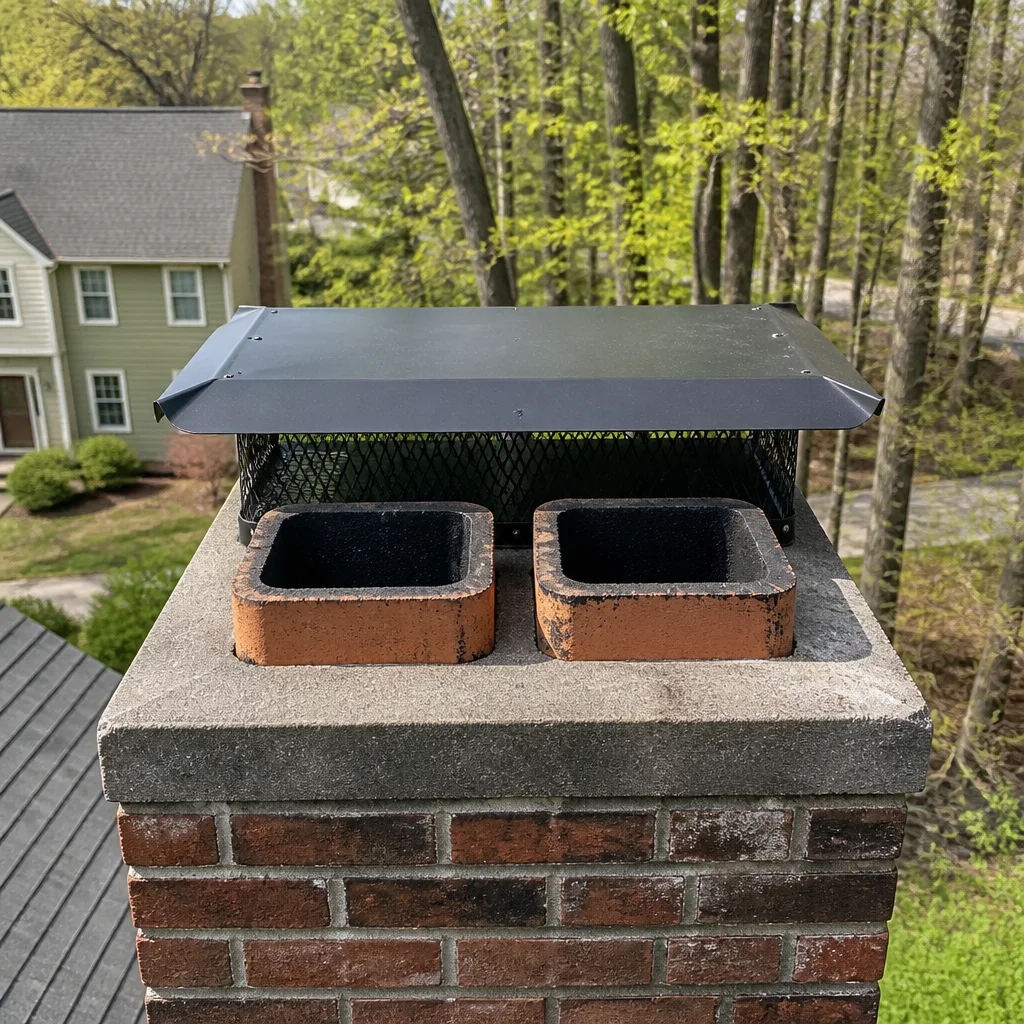 Sweep & inspection
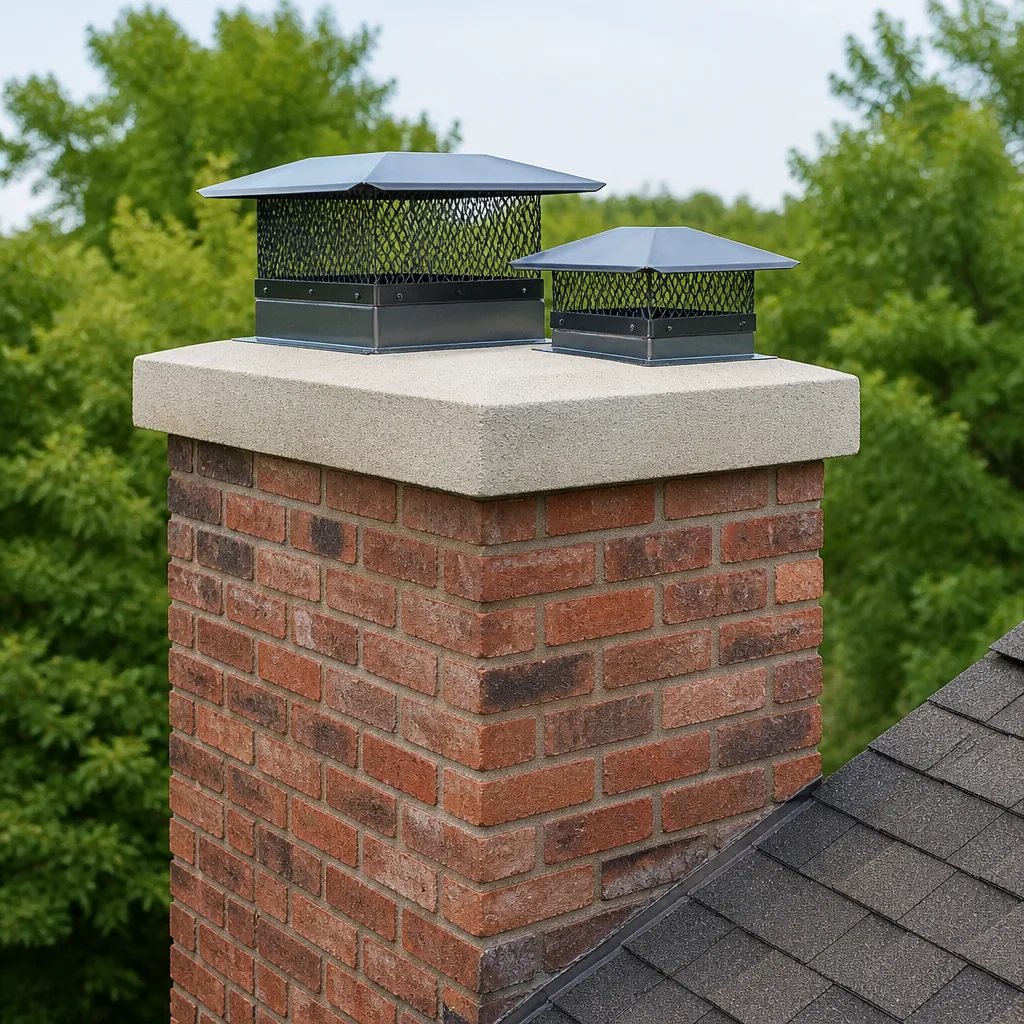 Caps & crowns
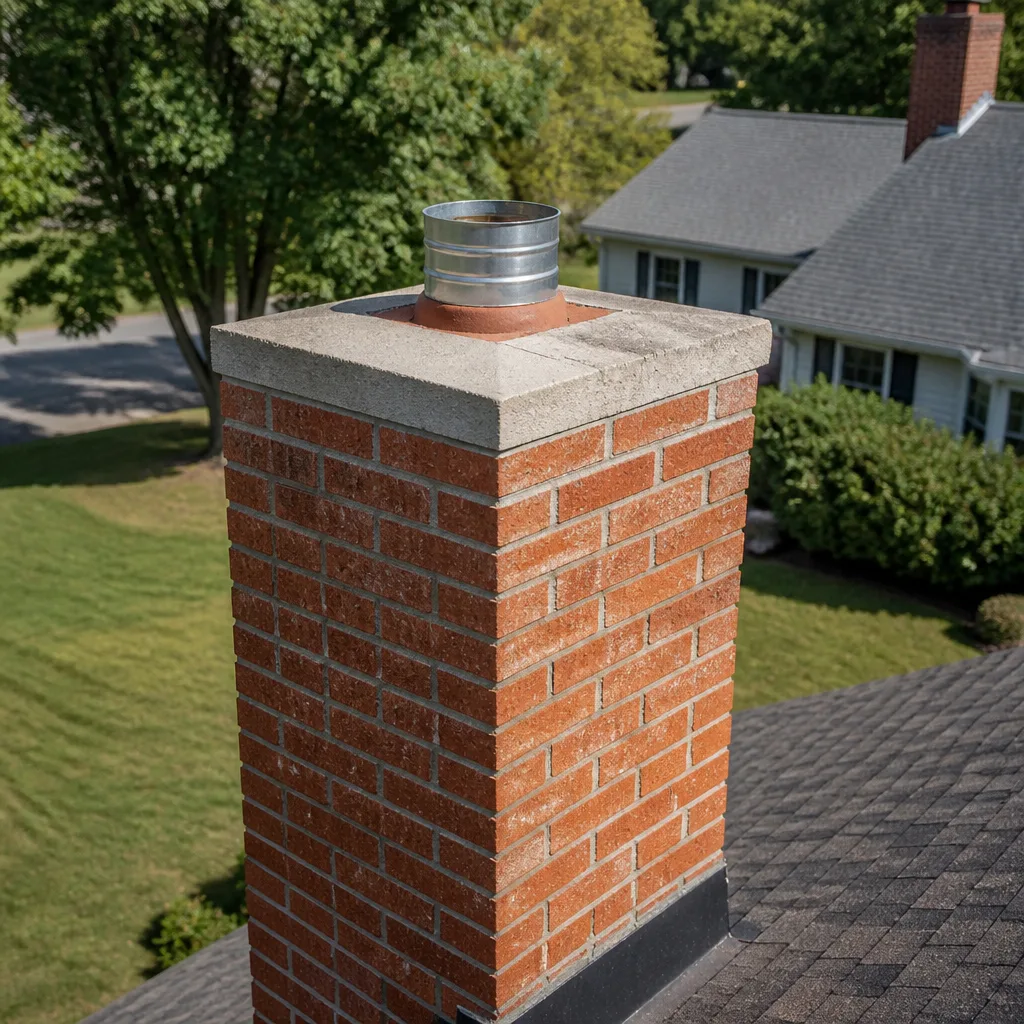 Flue relining
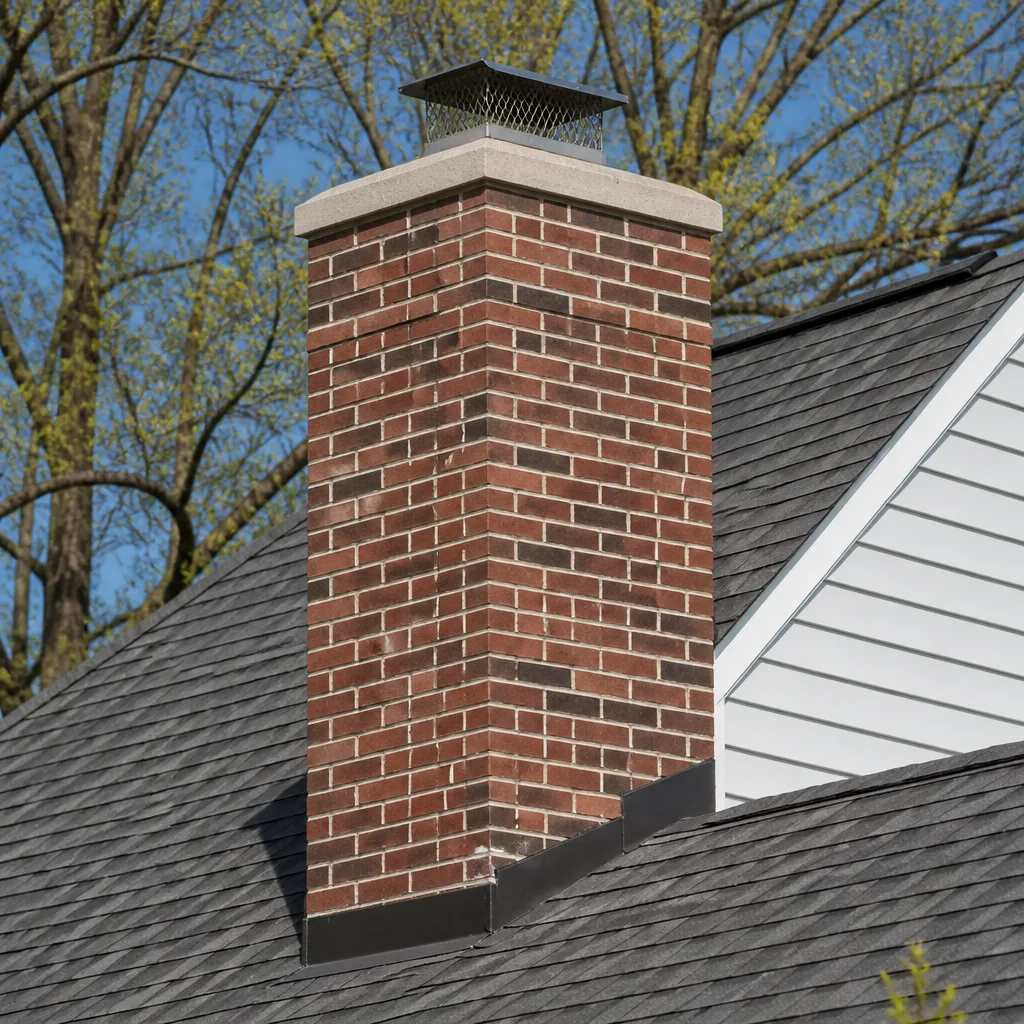 Masonry repair
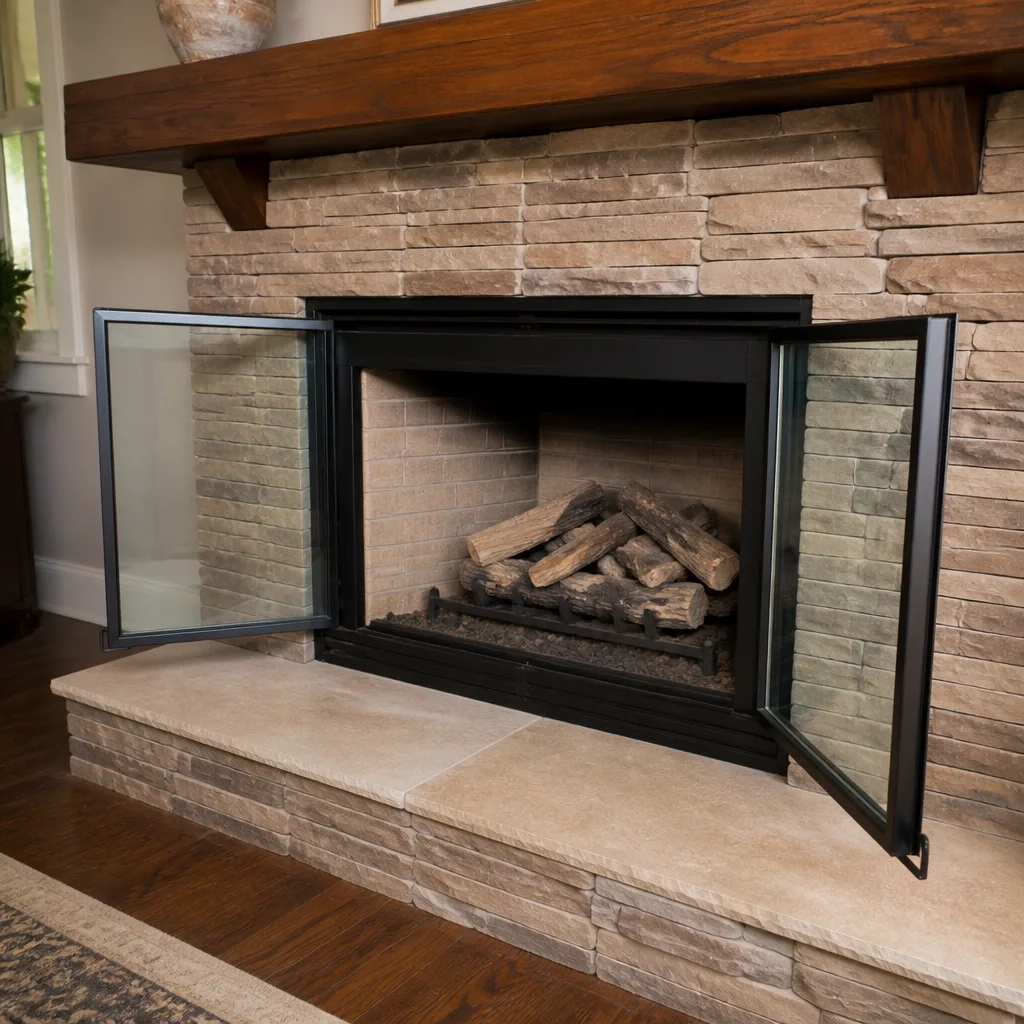 Gas fireplace service
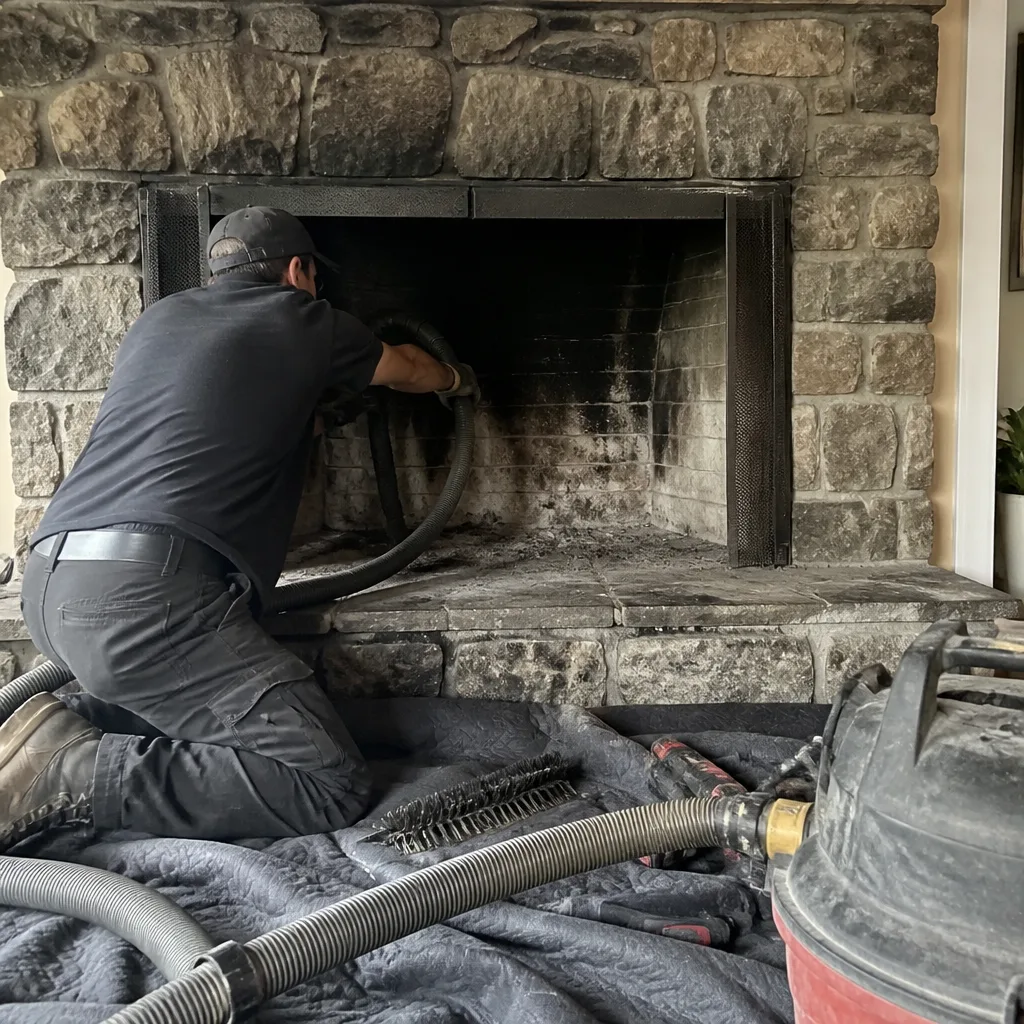
Level 1 sweep and inspection to the NFPA 211 annual standard - flue, crown, cap, and flashing checked and photographed
Chimney sweep logs do not sweep chimneys. They loosen some creosote - which then falls where a brush and vacuum still have to collect it.
Chimney Sweep Troubleshooting in Green Lake: Common Problems and How to Fix Them
Smoke rolling back into your living room doesn’t automatically mean your flue is clogged with creosote. It could be a pressure differential created by a kitchen exhaust fan, a damper that never seals shut, or a flue that was sized wrong for the firebox the day it was built. Most homeowners jump straight to “the chimney needs sweeping” and skip the step that actually tells them what’s wrong. This guide walks through the diagnostic logic we use: matching the symptom you’re seeing to the mechanical cause behind it, so you know whether you’re dealing with a minor adjustment or a structural problem that needs professional repair. We’ll cover the four core symptoms, Green Lake‘s wet-weather effect on masonry, and which checks you can safely do yourself.
Quick Answer
Most chimney problems in Green Lake trace to one of four causes: a blocked or undersized flue, a failed damper seal, negative pressure inside the house, or water intrusion degrading the mortar and flue lining. You can safely confirm a stuck damper or visible debris yourself, but backdraft, odor, and suspected liner cracks need a professional camera inspection to diagnose. Fixing the actual cause rather than sweeping blindly is what resolves recurring smoke and smell problems.
Styles & brands we work with
- Sweep & inspection
- Caps & crowns
- Flue relining
- Masonry repair
- Gas fireplace service
Table of Contents
- The Four Symptoms and What Each One Actually Means
- Backdraft and Smoke Rollback: Diagnosing the Pressure Problem
- Chimney Odor: Creosote, Damp, and the Smell That Returns Every Summer
- The Damper-First Diagnostic: Test Before You Assume a Blockage
- Green Lake’s Wet Climate and What It Does to Your Masonry
- Animal Intrusion: Sounds, Nesting Debris, and Missing Caps
- What You Can Safely Check vs. What Needs a Level 2 Camera Inspection
- Repair Paths: Sweeping, Resurfacing, and Relining
The Four Symptoms and What Each One Actually Means
Chimney trouble announces itself in a handful of predictable ways, and each symptom points to a different part of the system. Treating them as interchangeable is where most troubleshooting goes wrong. Here’s how we separate them.
- Backdraft or smoke rollback: Smoke exits the firebox into the room instead of up the flue. This points to a pressure imbalance, a flue that’s too short for the house, or a blockage near the top. Rarely is it just creosote.
- Odor: A sour, ashy, or acrid smell, often strongest in warm months or on humid days. It usually means creosote has absorbed moisture, or that a downdraft is pulling flue gases back down.
- Slow draw: The fire lights but burns lazy, with weak draft and smoke that hovers at the damper. Cause is often a partially closed damper, an undersized flue, or a cap with a clogged screen.
- Visible debris: Flakes of creosote, soot, or masonry falling into the firebox, or a pile of nesting material on top of the damper. This one is the clearest signal of a physical obstruction.
In our experience, homeowners in Green Lake often report two or three of these at once, because the underlying cause produces more than one symptom. A cap with a clogged screen, for example, causes slow draw, odor, and eventually debris falling back down the flue. Matching the cluster of symptoms to the mechanical cause is the whole point of a systematic check.
Backdraft and Smoke Rollback: Diagnosing the Pressure Problem
Backdraft is a pressure problem more often than a cleaning problem. Your chimney works because warm flue gas is lighter than the air in the room, so it rises. Anything that pushes indoor air pressure above outdoor pressure, or that cools the flue, can reverse that flow. Before you assume your flue is blocked, run through this sequence:
- Check the easy exhaust competitors. Turn off kitchen and bath exhaust fans, the dryer, and any central vacuum. If smoke stops rolling back once they’re off, the house is depressurized rather than the chimney being clogged.
- Crack a window near the fireplace. Open it an inch and light a small test fire. If the draft improves immediately, pressure is the culprit and the flue is likely fine.
- Check the flue temperature. A cold flue draws poorly. Pre-warming the flue with a rolled newspaper torch held near the damper (never inside a dirty flue) often restores draft on the first fire of the season.
- Look at the cap. From the ground with binoculars, check whether the cap screen is clogged with soot or packed with debris. A blocked cap produces textbook backdraft.
- Compare flue size to firebox. A flue that’s too large for the firebox cools gases before they exit; one that’s too small can’t move enough volume. Both cause rollback, and neither is fixed by sweeping.
If none of the first four checks resolves the problem, the fifth is beyond a homeowner’s diagnostic reach. Flue sizing and the interaction between your chimney, house tightness, and local wind patterns need a professional inspection to sort out. That’s one of the reasons we recommend a professional chimney sweep and inspection before considering any structural work.
Chimney Odor: Creosote, Damp, and the Smell That Returns Every Summer
Chimney odor is moisture interacting with combustion residue. Creosote and soot are porous, so when the air gets humid they absorb water and release that sharp, acrid smell back into the house. Green Lake’s climate, with its wet winters and muggy summers, makes that cycle predictable. The scent often shows up strongest on warm days or when the house is closed up. Here’s what the smell usually tells you:
- Sour, ashy smell in summer: Creosote has absorbed moisture. A proper sweep and inspection usually resolves it. Until then, keep the damper closed to block the smell from rising into the room.
- Smell strongest after rain: Water is getting in past a damaged cap, crown, or flashing. The fix is a cap and crown inspection, not a second sweep.
- Smell with no fire and no rain: Negative pressure is pulling flue gases down. Rule out backdraft using the sequence in the previous section.
- Smell of a dead animal or nesting material: Something is living or has lived in the flue. Stop using the fireplace and call for inspection.
We can’t stress this enough: odor alone doesn’t prove the chimney needs structural work. Treating a smell as a symptom to diagnose, rather than a reason to authorize expensive repairs, is how you avoid spending money on a fix you don’t need.
The Damper-First Diagnostic: Test Before You Assume a Blockage
Test the damper before you assume the flue is blocked. A damper that doesn’t seal or won’t open fully produces the same symptoms as a clogged flue, and it’s the simpler and cheaper fix. Here’s how to check it safely:
- With no fire and the fireplace cold, reach up to the damper handle (or use the lever or chain depending on your fireplace type) and open it fully. It should move smoothly to a hard stop.
- Shine a flashlight up past the damper. You should see a clear, unobstructed stretch of flue. A straight, distinct view is a good sign. If you can’t see light past the damper plate, either the plate is stuck or there’s a blockage.
- Close the damper and look for a gap. With the plate closed, check for visible daylight around the seal. Any gap means the damper isn’t sealing and warm flue gases will leak past it.
- Feel for smoothness. A damper that binds, clicks, or drops without resistance has a broken linkage or warped plate. Those are repair items, not cleaning items.
Damper problems are the most underdiagnosed cause of poor fireplace performance we encounter in Green Lake. Homeowners assume the flue is dirty because the fire smokes, when in fact the damper hasn’t been operating correctly for years. A proper fireplace repair visit addresses the damper and the firebox together, which is the only way to be sure the fix actually sticks.
Green Lake’s Wet Climate and What It Does to Your Masonry
Green Lake’s rain and humidity accelerate brick and mortar deterioration in a way that dry-climate homeowners don’t experience. Mortar is porous. Every wet season it absorbs water and every dry season it releases it. Over years, that freeze-thaw and wet-dry cycling weakens mortar joints and causes spalling, where the face of a brick flakes off. The result is interior cracks in the flue liner that aren’t visible from the firebox, which is why the exterior of your chimney can look fine while the inside is compromised.
Signs worth flagging around Green Lake homes:
- Mortar joints that crumble when you brush them with a gloved finger. Soft, sandy joints mean the mortar has lost its binder.
- White chalky staining on brick (efflorescence) means water is moving through the masonry and drying out on the surface.
- Rust stains on the firebox or damper signal water coming down the flue from above.
- Flaking brick faces on the chimney stack, especially near the top where rain hits hardest.
That last point matters for the top of the chimney. The crown and cap are your first defense against the wet weather that does this damage. Our chimney cap & crown installation is the proactive fix: keeping water out before it can weaken the mortar below. If you own an older Green Lake home and haven’t had the crown inspected, that’s a sensible starting point.
Animal Intrusion: Sounds, Nesting Debris, and Missing Caps
Scratching, flapping, or chirping sounds from the chimney usually mean birds, squirrels, or raccoons have found an opening at the top. The common entry point is a missing, loose, or damaged cap. Chimney caps fail in a few ways: the screen rusts through, the fasteners work loose, or the cap is simply never installed. Once the top opening is exposed, animals move in, and the first symptom a homeowner notices is a draft problem, because the nest restricts airflow.
What to watch for:
- Sounds, especially at dawn or dusk. Active nesting or movement inside the flue.
- Droppings or nesting material on top of the damper or in the firebox.
- Reduced draft in a chimney that used to draw well.
- A missing or damaged cap visible from the ground. This is the underlying cause, not the current symptom.
Never light a fire while an animal or a nest is suspected in the flue; the obstruction can send smoke into the house and, with nesting material, create a fire hazard. The fix has two parts: clearing the flue and reinstalling a proper cap, using professional-grade stainless options like Olympia Chimney or Copperfield. One visit handles both, and the cap prevents the problem from returning. If you suspect intrusion, don’t run the fireplace until the flue has been inspected and cleared.
What You Can Safely Check vs. What Needs a Level 2 Camera Inspection
Homeowners can safely check more than they think, but there are clear limits. Here’s the split we use.
Safe for you to observe:
- Whether the damper opens and closes fully
- Visible debris on the damper or in the firebox
- The condition of the cap from the ground with binoculars
- Whether smoke rolls back when exhaust fans are running
- Odor patterns (after rain, summer, closed house)
- Visible cracking on the exterior brick or crown
Needs a professional camera inspection:
- Interior cracks in the flue liner (the ones that cause real safety problems)
- The condition of the smoke chamber and flue joints
- Whether a flue is sized correctly for the firebox
- Creosote thickness beyond what a flashlight can show
- The cause of persistent backdraft after simple pressure fixes
A camera inspection is the only way to see the inside of the flue and confirm what the surface symptoms are actually pointing to. This is where a full-service specialist earns their keep. We handle everything from the chimney sweep to the liner repair the camera inspection reveals, so you’re not coordinating two contractors and hoping they agree on the diagnosis.
Repair Paths: Sweeping, Resurfacing, and Relining
Once the diagnosis is clear, the repair path usually falls into one of three levels. Each addresses a different problem, and the right one depends on what the camera inspection shows.
- Sweeping and inspection: For routine maintenance and light creosote buildup. Removes soot and creosote, confirms the flue is clear, and addresses most odor and slow-draw problems.
- Resurfacing: For a flue interior with cracks or deterioration in the liner itself, we use HeatShield, a professional resurfacing system applied to the damaged flue surface. This restores the liner without full replacement and is a capability most basic sweep companies don’t offer.
- Relining: For a compromised or outdated flue system, we install DuraFlex stainless liners, which restore the structural integrity of the flue and restore proper draft. This is structural work, not a cleaning level of repair.
We also handle cap and crown installation, fireplace repair, and structural chimney repair, so the repair path is decided in one place. The key is that the diagnosis drives the repair, never the other way around. If a sweep is all that’s needed, we say so; if the inspection reveals a liner that needs resurfacing or replacement, we show you the camera footage and explain why before any work is quoted.
Common Mistakes to Avoid
- Assuming smoke means a dirty flue. Backdraft is usually a pressure or damper issue, and sweeping won’t fix either one.
- Using the fireplace with a suspected animal nest. The obstruction is a fire hazard and can send smoke into the room; stop until the flue is cleared and inspected.
- Ignoring crumbly mortar and chalky brick. In Green Lake’s wet climate these are early warning signs of water intrusion that will worsen if left alone.
- Skipping the camera inspection on an older home. Surface symptoms rarely reveal the true condition of the flue liner, and an uninspected liner is a safety issue.
- Treating a stuck damper as a cleaning problem. A damper that doesn’t seal is a fireplace repair item, not a sweep item.
- Burning wet or unseasoned wood. It produces more creosote and makes every symptom on this list worse.
- Going without a cap. An uncapped chimney invites animals, rain, and debris; the cap is the simplest way to prevent several of these problems at once.
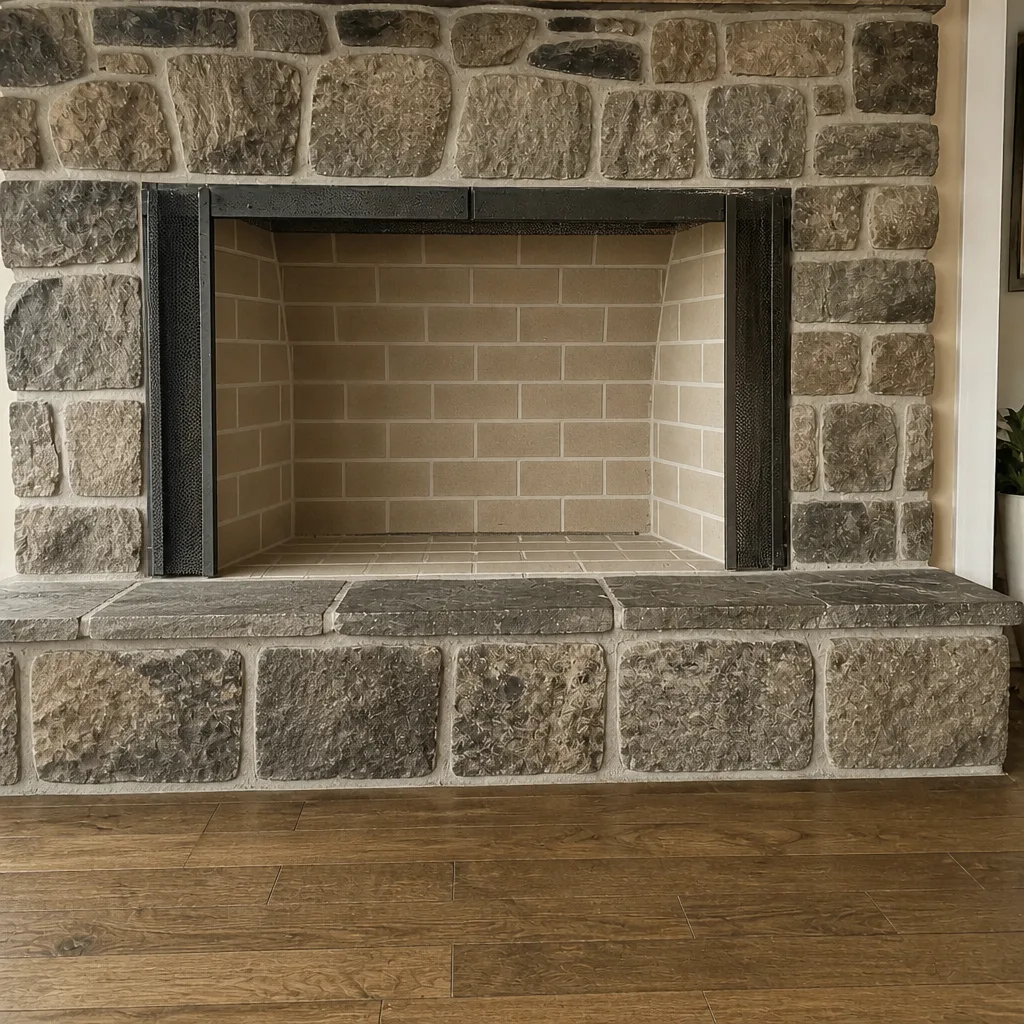
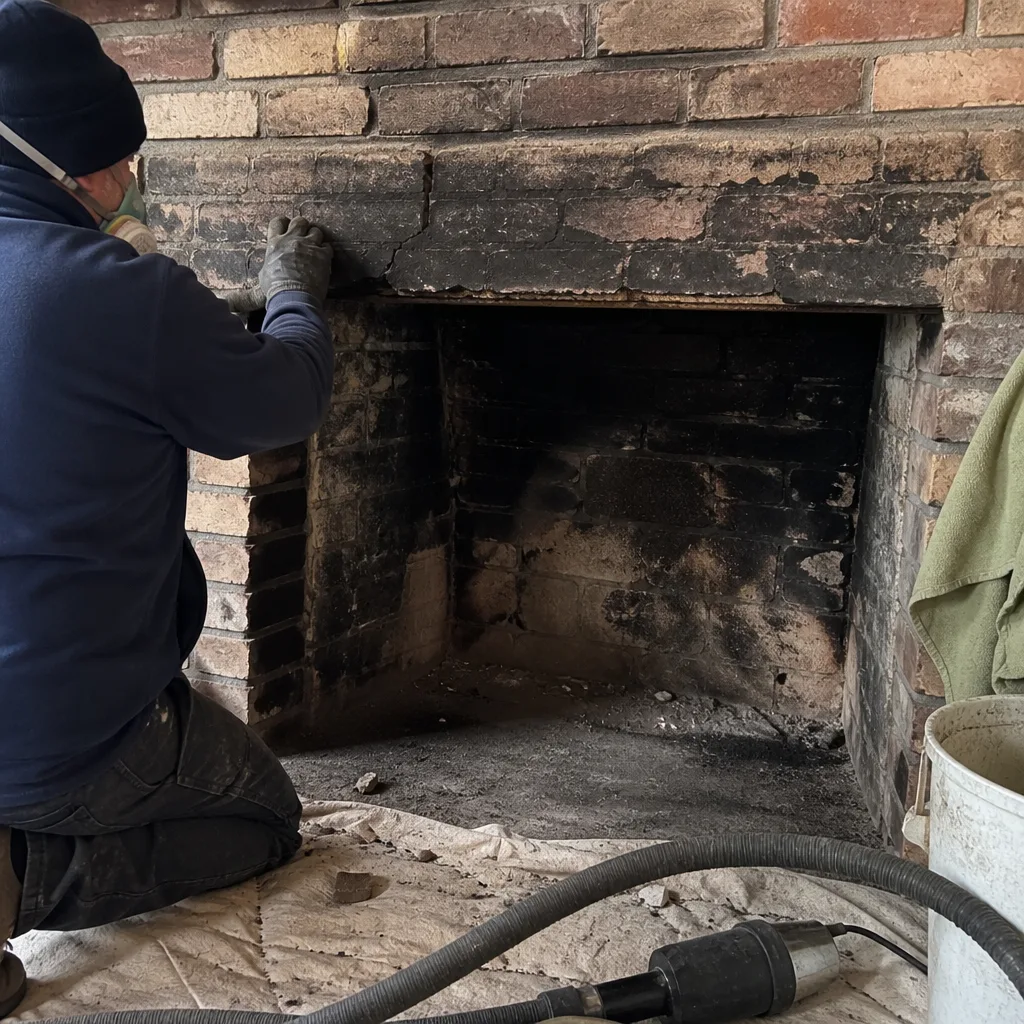
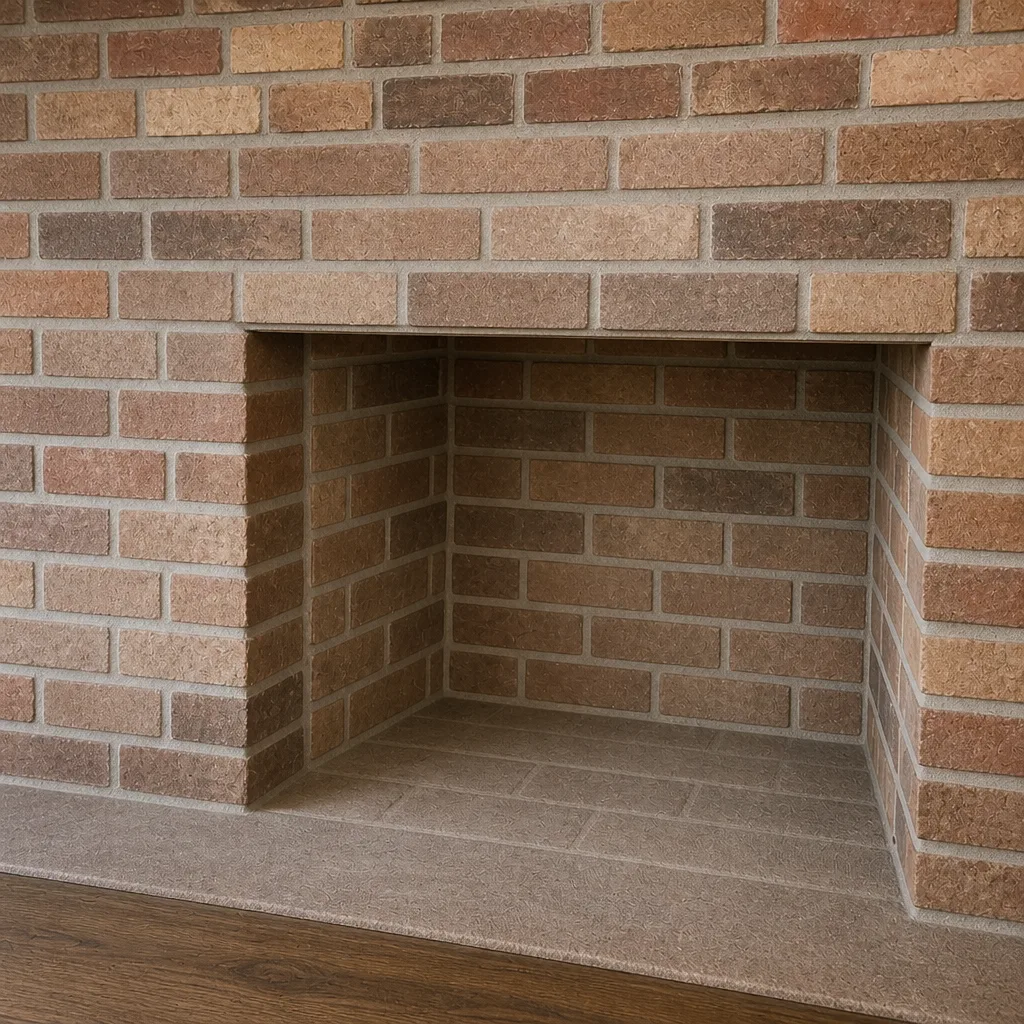
See the difference
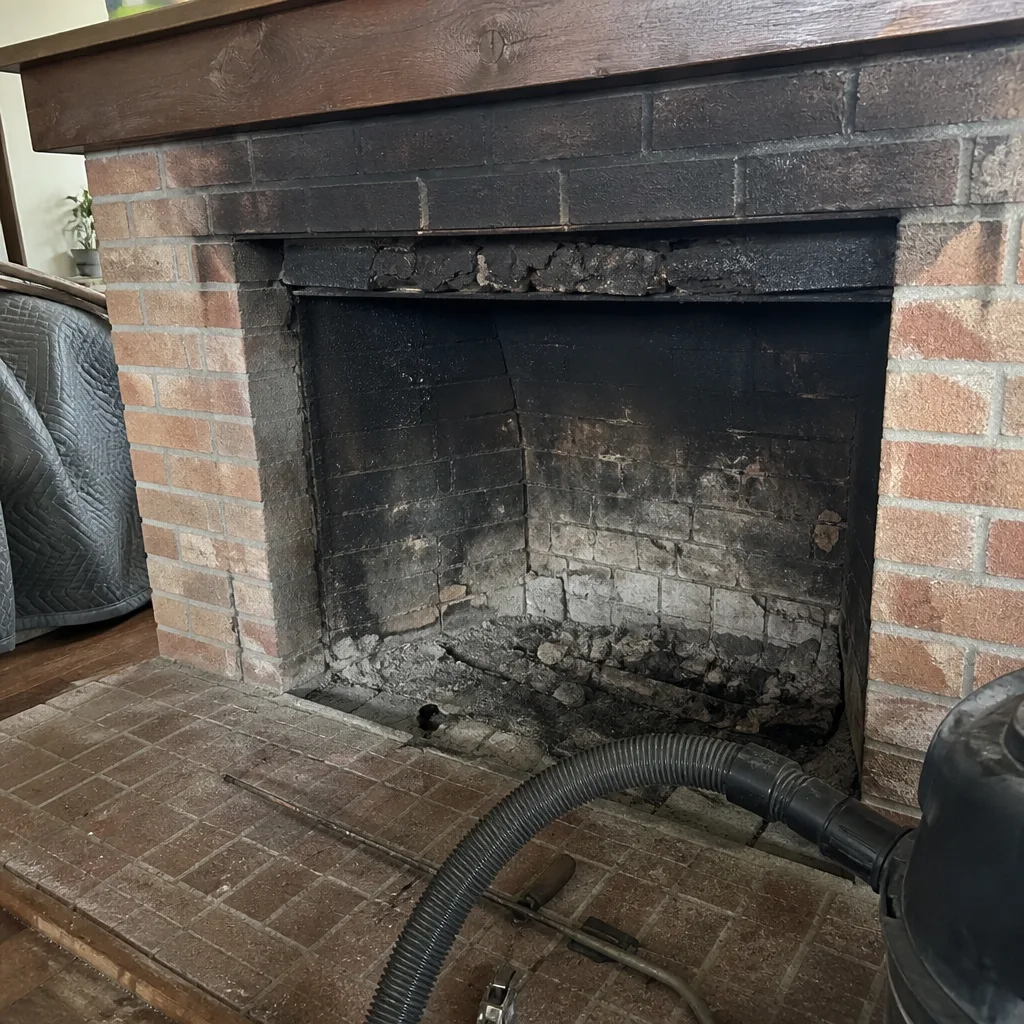 Before
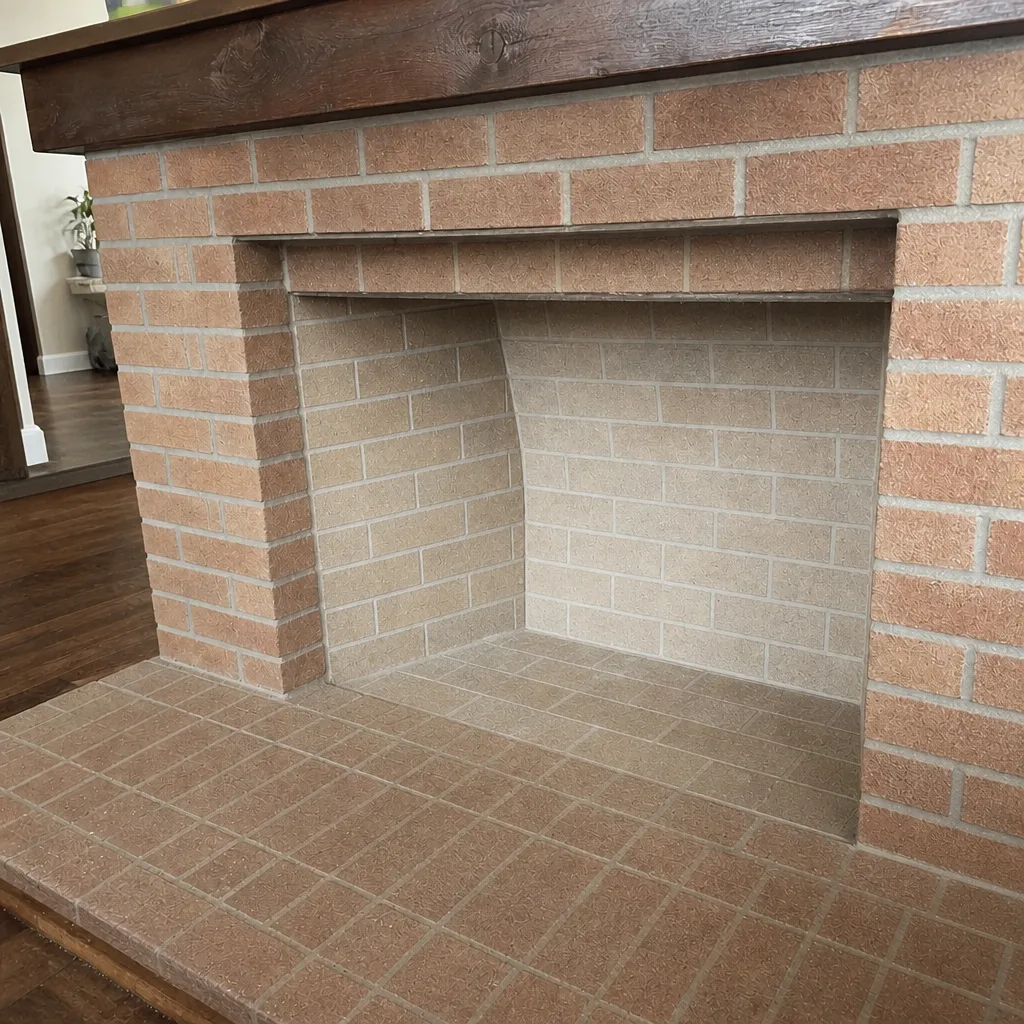 After
 Before
 After
 Before
 After
When to Call a Professional
Call a professional when you smell gas, see smoke rolling into the room and simple pressure fixes don’t help, notice creosote or soot falling into the firebox, hear animal sounds in the chimney, see water stains or crumbling mortar, or notice the damper binding or won’t open fully. Also call if you haven’t had the flue inspected in a long time, or if you’re buying a home and want to know what you’re inheriting. Chimney Sweep Green Lake offers free estimates in Green Lake, and we can work with your insurer if the repair becomes a covered claim. Call (877) 820-8284. We answer 24/7. Fast dispatch from 7am to 7pm, Sunday through Friday.
Frequently Asked Questions
Smoke in the living room usually means backdraft, caused by pressure imbalance, a flue that’s too short, or a blocked cap, not simply a dirty flue. Turn off exhaust fans and crack a window; if that solves it, pressure is the cause. If it doesn’t, book an inspection. Call (877) 820-8284 for an exact quote on the diagnosis; estimates are free.
For a regularly used wood-burning fireplace, we recommend sweeping once a year, with an inspection each time. Green Lake’s wet climate makes it worth checking the crown and cap as part of that annual visit. If you notice odor, slow draw, or debris between visits, call sooner. Call (877) 820-8284 to book; estimates are free.
A liner replacement is only justified when a camera inspection shows actual deterioration, cracks, or a flue that can’t safely contain the fire. We show you the footage before quoting, and if resurfacing with HeatShield will fix it, we recommend that instead. Nothing is recommended without evidence you can see. Call (877) 820-8284 for an exact quote; estimates are free.
Skipping inspection risks two real problems: a chimney fire from accumulated creosote, and carbon monoxide leaking through a cracked liner. Neither is a problem you can see from the firebox. The fix is a routine inspection that catches either before it becomes dangerous. Call (877) 820-8284 to schedule; estimates are free.
Scratching, flapping, or chirping sounds, especially at dawn and dusk, along with droppings or nesting material on the damper, are the usual signs. Don’t use the fireplace until the flue has been cleared and a proper cap installed. Call (877) 820-8284 to schedule the inspection; estimates are free.
You can safely check the damper, spot visible debris, and inspect the cap from the ground, but the inside of the flue, the smoke chamber, and the liner require a camera inspection. Cleaning a creosote-filled flue without proper equipment risks a chimney fire and misses the actual problem. Call (877) 820-8284 for a professional sweep and inspection; estimates are free.
The Bottom Line
Most chimney problems in Green Lake trace back to a small set of causes: pressure problems that cause smoke rollback, damper seals that fail, caps that let in animals or water, and masonry that deteriorates in the wet climate. The diagnostic order matters. Check the damper, rule out pressure, inspect the cap from the ground, then bring in a camera inspection for anything that needs to be seen inside the flue. Fixing the actual cause instead of sweeping blindly is what stops the same problem from coming back season after season. Safety starts inside the flue, and it’s worth knowing what’s really in there before the next fire.
Chimney Sweep Green Lake handles the full range of work, from the annual sweep and inspection to resurfacing with HeatShield, relining with DuraFlex, and cap and crown installation. Whether you need a routine inspection or a repair other sweeps refer out, we’re your chimney’s first and last call. Call (877) 820-8284 for a free estimate. We answer 24/7. Fast dispatch from 7am to 7pm, Sunday through Friday. Our technicians have up to 9 years of experience.
Written by the team at Chimney Sweep Green Lake.