
Last updated November 25, 2026
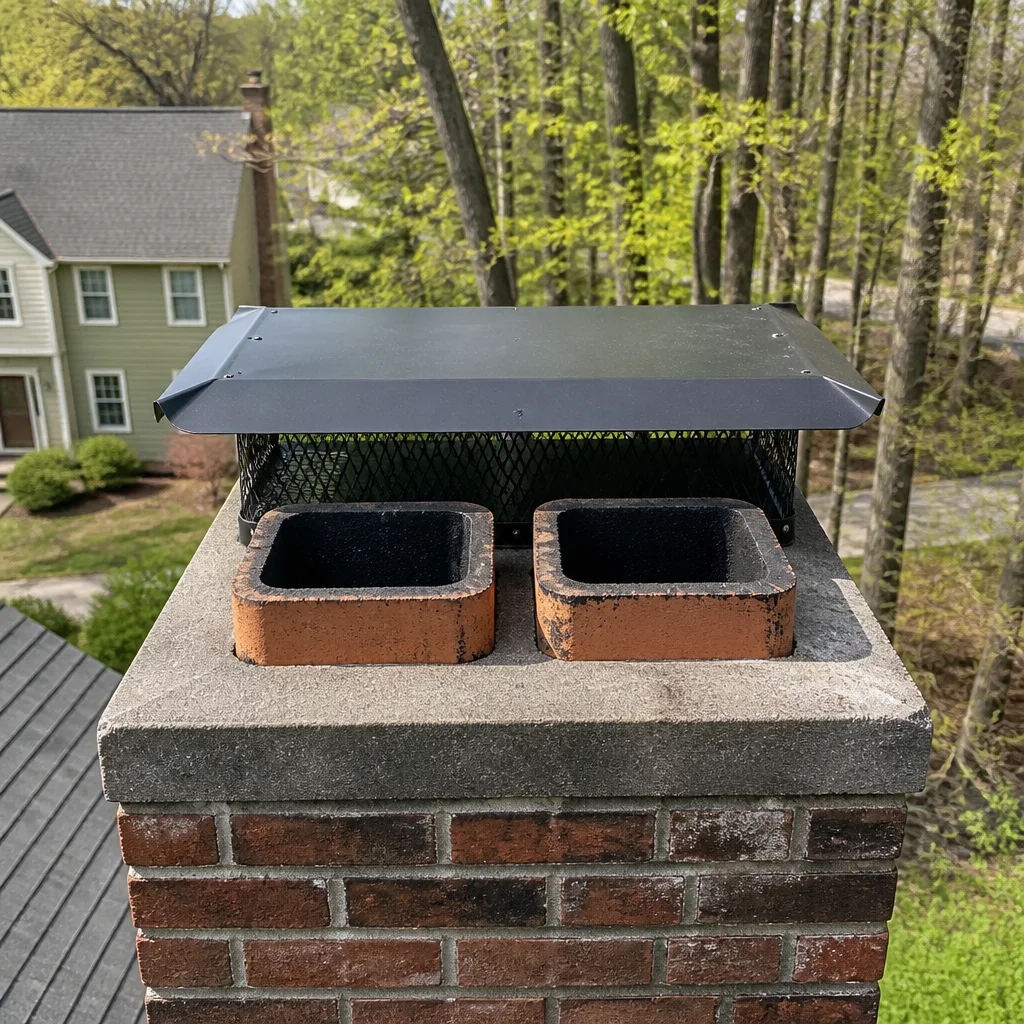 Sweep & inspection
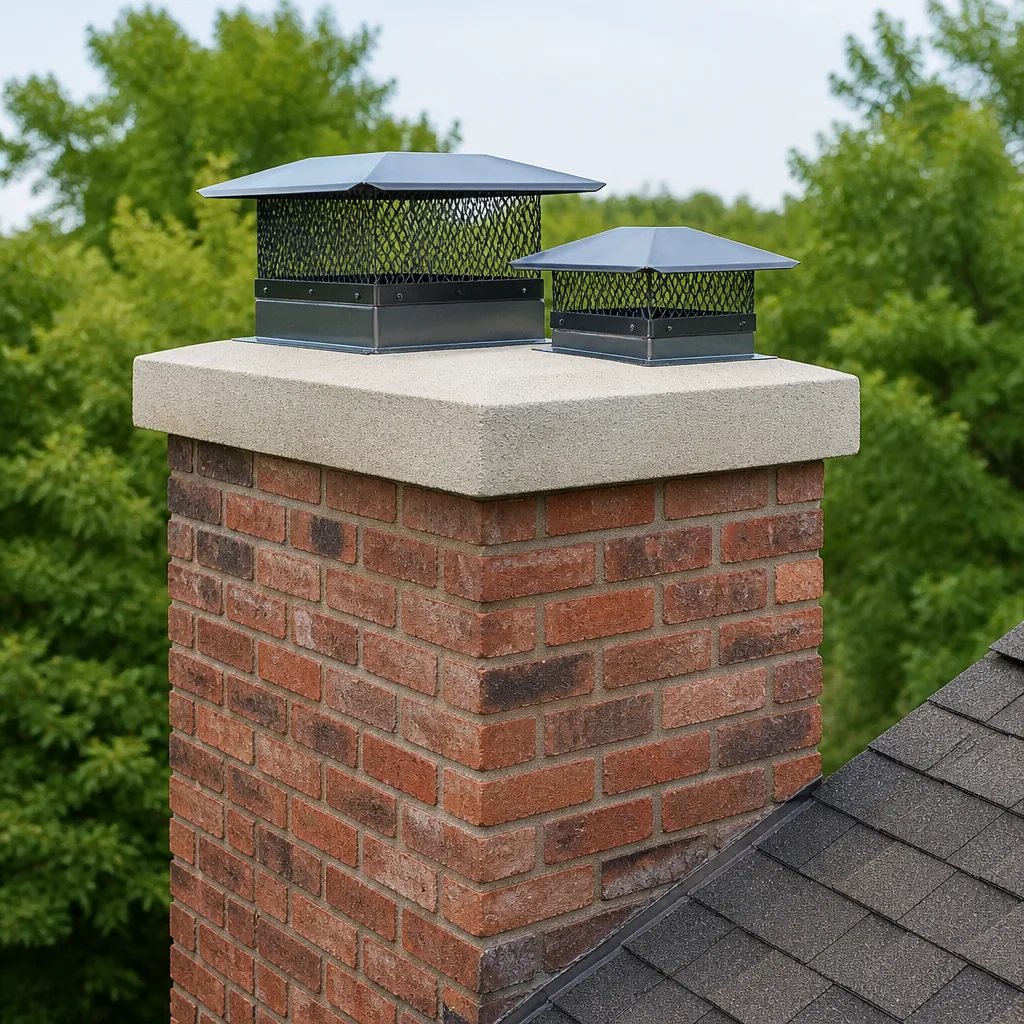 Caps & crowns
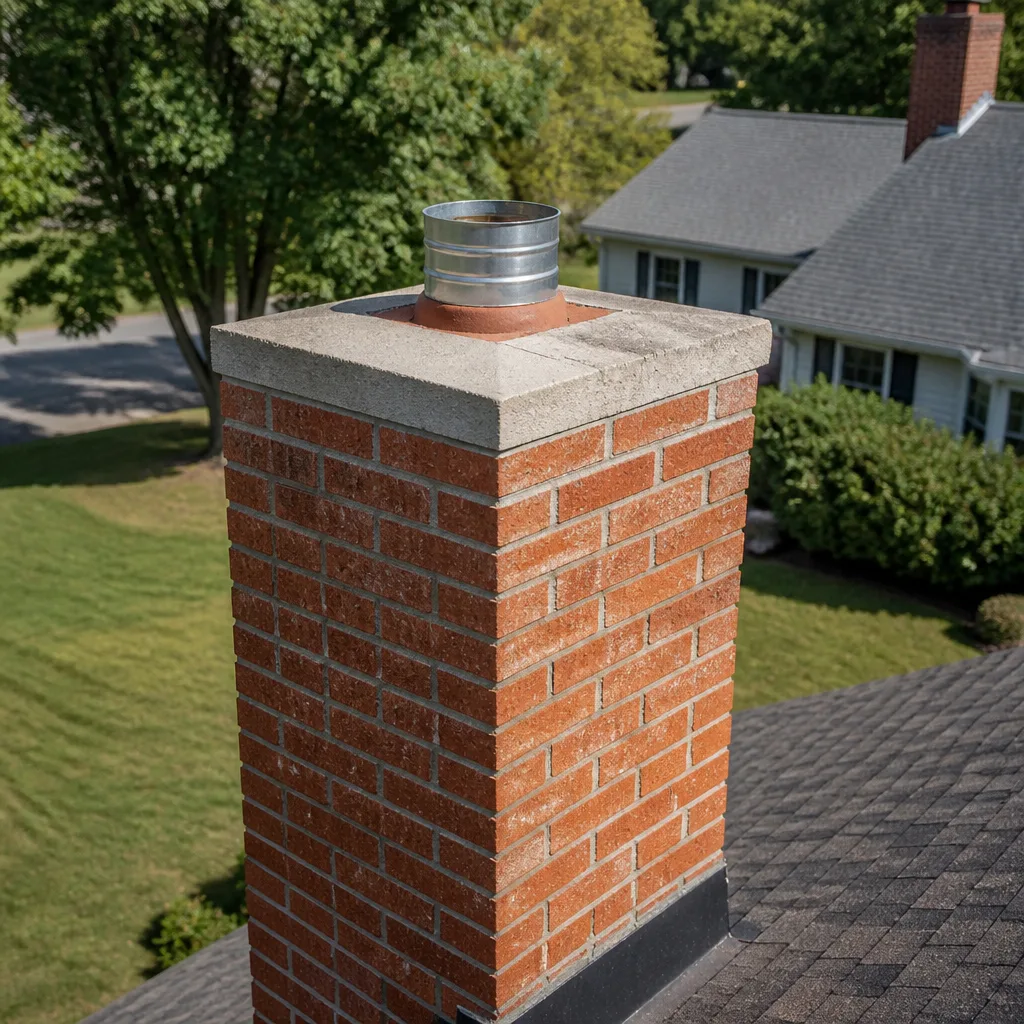 Flue relining
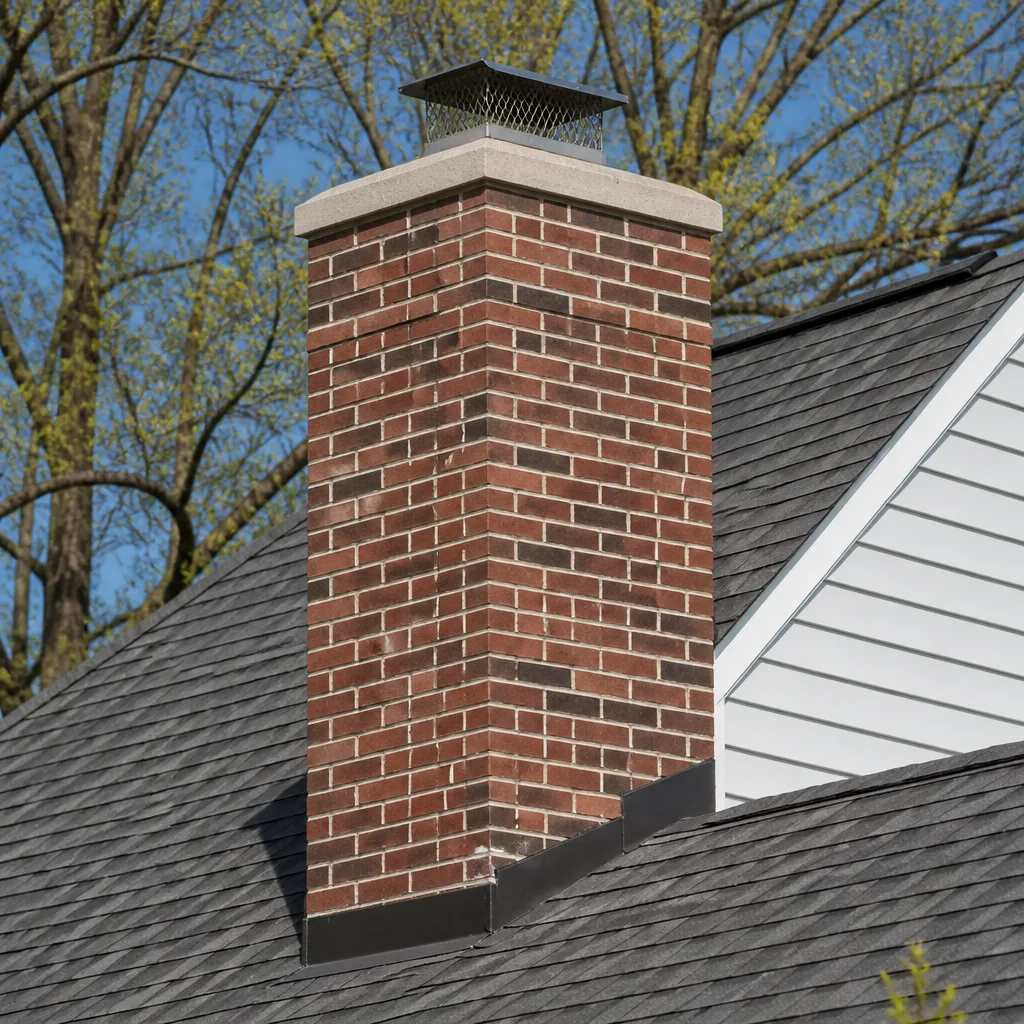 Masonry repair
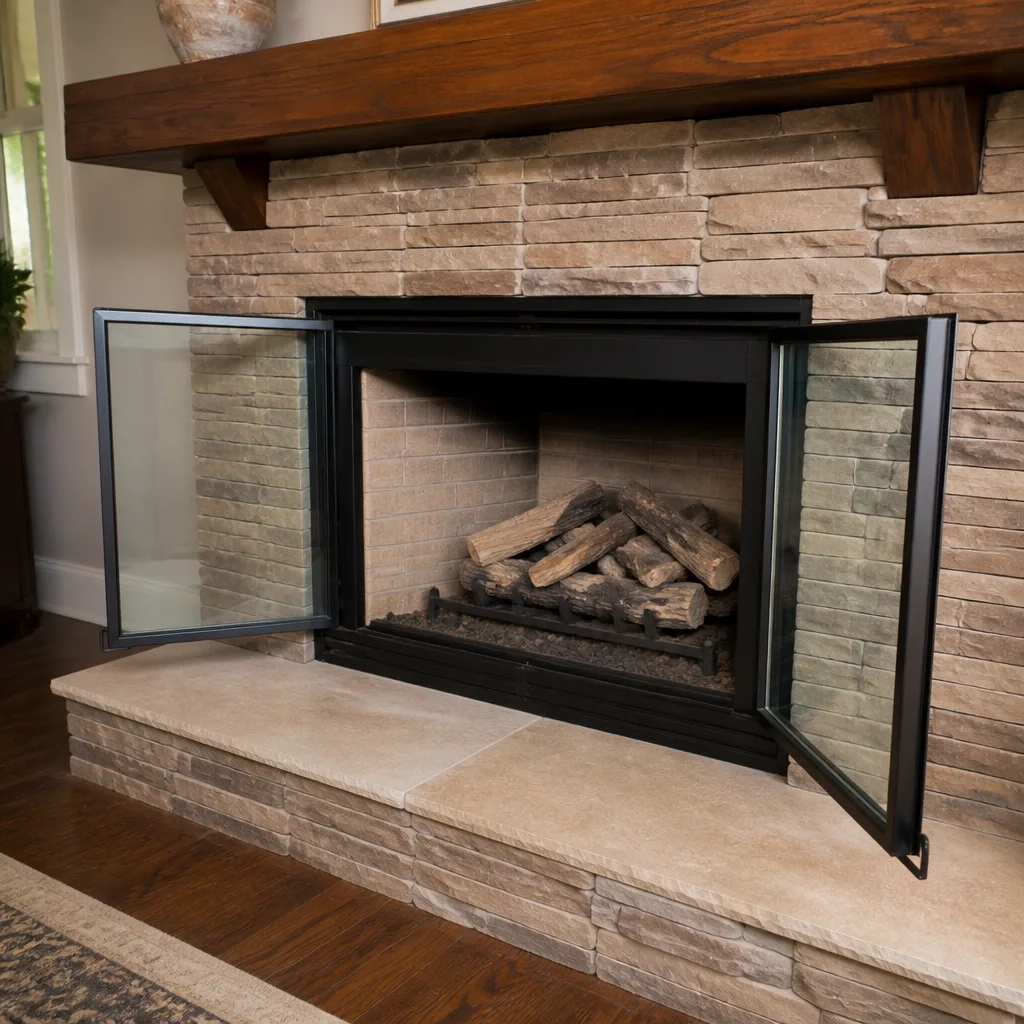 Gas fireplace service
Level 1 sweep and inspection to the NFPA 211 annual standard - flue, crown, cap, and flashing checked and photographed
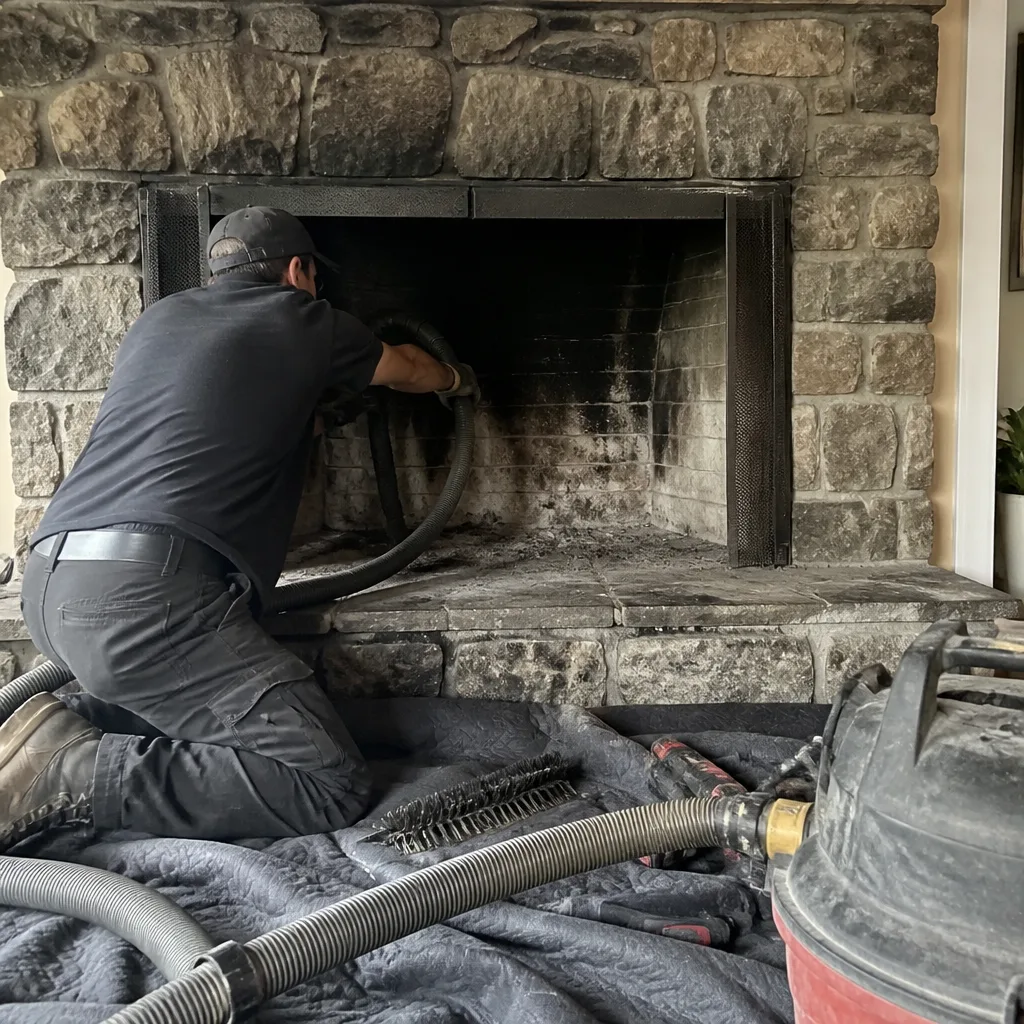
Chimney sweep logs do not sweep chimneys. They loosen some creosote - which then falls where a brush and vacuum still have to collect it.
Chimney Cleaning Emergency Preparedness Guide for Green Lake Homes
Most homeowners think of a chimney emergency as something that happens to other people. The reality is less dramatic and more useful: a chimney fire, a sudden blockage, or a carbon monoxide event tied to draft failure almost always follows a chain of small maintenance failures that went unnoticed for a season or two. Break any link in that chain and the emergency never happens. This guide covers the three emergencies that actually show up in Pacific Northwest homes, the sequence of maintenance failures behind each one, and what to do in the minutes after something goes wrong. If you only read one section, read the one on what to do during a chimney fire. It’s written for Green Lake homes with wood-burning fireplaces, inserts, and stoves, but the logic applies to any masonry chimney in the neighborhood.
Quick Answer
A chimney emergency is almost always preventable. The three most common in Green Lake homes are chimney fires from creosote ignition, sudden blockages from bird nests or fallen debris, and carbon monoxide events caused by draft failure. Preventing them means annual inspection and sweeping, a properly fitted cap, and knowing the response steps before you need them. During a chimney fire, close the glass doors, shut the damper if you can safely reach it, get everyone out, and call 911.
Styles & brands we work with
- Sweep & inspection
- Caps & crowns
- Flue relining
- Masonry repair
- Gas fireplace service
Table of Contents
- The Three Chimney Emergencies Green Lake Homeowners Actually Face
- Prevention Logic: Interrupting the Cause Before It Becomes an Emergency
- What to Do (and What Not to Do) During a Chimney Fire
- Recognizing Draft Failure and CO Risk Before the Detector Alarms
- The Post-Emergency Inspection: Why Level 2 Is the Minimum
- Documenting the Event for Insurance
- Building a Chimney Emergency Preparedness Kit
- Green Lake Winter Conditions That Raise Your Risk
The Three Chimney Emergencies Green Lake Homeowners Actually Face
Not every chimney problem is an emergency, and treating a routine issue like a crisis wastes money and attention. Three specific scenarios in Green Lake homes rise to the level of a true emergency because they involve fire, a physical obstruction, or a gas hazard. Each one has a different maintenance failure behind it, which means each one can be interrupted at a different point.
1. Chimney Fires Caused by Creosote Ignition
Creosote is the tar-like residue left behind when wood burns. When it builds up on the flue walls and reaches a certain thickness, a hot fire or a burst of flame can ignite it. A chimney fire can be loud and obvious, or it can be a slow, quiet burn that damages the flue from the inside without anyone noticing. The maintenance failure behind creosote ignition is skipped or delayed sweeping. Homes that burn regularly, especially with less-seasoned wood, build creosote faster than most people expect.
2. Sudden Blockages from Nests, Debris, or Flue Collapse
Birds, squirrels, and raccoons treat uncapped chimneys as real estate. A nest built in the flue in the spring can sit there all summer and become a wall of obstruction the first time you light a fire in fall. Debris like leaves and twigs, and in older masonry chimneys the occasional loose flue tile, cause the same problem. The failure here is often a missing or damaged chimney cap. This is one of the reasons a properly fitted cap matters enough that we treat chimney cap & crown installation as a core service, not an upsell.
3. Carbon Monoxide Events from Draft Failure
Carbon monoxide is colorless and odorless, which makes draft failure the most dangerous of the three. A blocked or partially blocked flue, a negative pressure problem inside the house, or a damaged flue liner can all cause combustion gases to spill back into living space instead of exhausting up the chimney. The failure here can be an aging liner, a house tightened up during a remodel without adding makeup air, or simply a flue that’s never been inspected. A CO event is a medical emergency and a chimney emergency at the same time.
- Chimney fire – cause: creosote buildup; prevention: regular sweeping.
- Blockage – cause: missing or damaged cap, animal nests, debris; prevention: capped flue, annual inspection.
- CO event – cause: draft failure, damaged liner, pressure imbalance; prevention: inspection, liner assessment, working CO alarms.
Prevention Logic: Interrupting the Cause Before It Becomes an Emergency
Every chimney emergency has a maintenance window where it can be stopped. The trick is knowing where that window is in your own home. For most Green Lake homeowners, the window is the annual inspection, which is also the point where a chimney sweep catches the buildup that leads to creosote fires. Getting ahead of these problems means thinking in terms of the sequence, not just the checklist.
- Inspect annually. A trained technician checks the flue interior, the firebox, the damper, the cap, and the crown. Inspection catches deterioration before it becomes structural. We work with brands like Olympia Chimney and DuraFlex because that’s the material quality that holds up over many heating seasons in this climate.
- Sweep when the inspection calls for it. Not every inspection requires a sweep. When it does, sweeping removes the creosote that fuels fires and clears the obstruction that could block a flue. Level of buildup, burning habits, and how much wood you burn all factor in.
- Cap and seal. A fitted cap, and a crown in good repair, keep water, animals, and debris out. Famco and Copperfield caps are the kind of professional-trade products we install because they hold up in wet weather. The crown is the concrete top of the chimney; when it cracks, water enters the masonry and freeze-thaw cycles make it worse.
- Watch the liner. The flue liner is what actually keeps hot gases and CO going up and out. A cracked clay tile liner or a deteriorated flue calls for liner work, which is a structural repair beyond a basic sweep. DuraFlex liners and HeatShield resurfacing are the tools we use for that class of job.
- Confirm draft after every change. New appliances, new windows, added insulation, or a remodeled basement can all change how your house moves air. A draft test after any of those changes is the cheapest insurance there is.
Our technicians have up to 9 years of experience, and the pattern we see repeatedly is a home that’s been fine for years until something else in the house changes. That’s the moment to schedule the next inspection, not the moment to wait for the next burning season.
What to Do (and What Not to Do) During a Chimney Fire
If you suspect a chimney fire, treat it as a structure fire until a professional says otherwise. The two minutes before the fire truck arrives are when most of the meaningful decisions happen, and those decisions are almost the opposite of what many people instinctively do. A chimney fire that sounds like a low roar or popping from inside the flue is already a structure event. The question isn’t whether to call 911. It’s whether you know what to do while you wait.
What to do, in order
- Call 911. Do this first, or have someone else do it while you finish the next steps. A chimney fire can spread into the attic or roof framing without visible flames from the outside.
- Close the glass doors or the stove door. Cutting the air supply to the fire is the single most effective thing you can do. Close the doors fully. Don’t open them to look.
- Shut the damper if you can reach it safely. If the damper control is on the face of the fireplace and you can close it without opening the doors, close it. Restricting the airflow up the flue starves the fire. If reaching it means opening the firebox, leave it alone.
- Get everyone out of the house. Adults, kids, pets. Go outside and stay outside. Don’t stop to gather belongings.
- Wait for the fire department. Don’t re-enter the house to check on the fire. A chimney fire can seem to go out and then flare up again when fresh air reaches it.
What not to do
- Don’t throw water on the fire. A large volume of water on a hot fire can crack masonry or damage a metal liner and create a steam hazard.
- Don’t spray a fire extinguisher up the flue. You can’t reach the fire, and the discharge can make a mess that’s harder to clean afterward.
- Don’t open the doors to look. Every time you open the glass, you feed the fire oxygen. That’s the opposite of what you want.
- Don’t assume it’s out because the noise stopped. Chimney fires can reignite. The fire department needs to confirm it’s out, and a professional inspection is required before you use the fireplace again.
- Don’t drive to the fire station instead of calling. Call 911 first, then evacuate. The dispatcher will give you the address to send help to faster than you can drive there.
Every step in this sequence buys time. None of it replaces a professional. The fire department handles the fire; a chimney specialist handles what comes after.
Recognizing Draft Failure and CO Risk Before the Detector Alarms
A carbon monoxide detector is a critical last line of defense, not a first one. By the time it goes off, the gas is already at a dangerous concentration in the room. The smarter approach is learning the signals of draft failure so you can act before the alarm sounds. Draft failure is the loss of the upward air movement that pulls combustion gases out of your house. When it fails, those gases spill back in.
Signs of draft failure to watch for
- Smoke backing into the room when you light a fire or shortly after. A little smoke on first light is normal; repeated spillage is not.
- A smell of smoke in the room when the fire is burning clean. If you smell smoke with no visible haze, the flue is not pulling.
- Lazy flames or a fire that smolders despite good wood and airflow. A weak fire often means the flue is struggling to move air.
- Soot streaks or a dark smudge on the fireplace face above the opening. This is a visual record of smoke that has been spilling out.
- Headaches, dizziness, or nausea that get worse in the room with the fireplace. These are signs of possible CO exposure. Leave the room and get fresh air immediately if they appear.
- Condensation on windows or interior moisture that wasn’t there before. A sign the flue gases may be cooling inside the flue instead of exiting, which can point to a draft problem.
What to check
If you notice more than one of these signs, stop using the fireplace and call for an inspection. Don’t try to diagnose it yourself beyond checking that the flue hasn’t been physically blocked (a nest, a collapsed tile, or something stored in the firebox). A trained inspector tests draft with proper equipment, inspects the flue interior with a camera, and confirms the liner is intact. If you notice these signs in a home where the chimney’s never been inspected, that’s a strong signal to schedule one. A full chimney inspection is the starting point, and ours includes camera inspection and a photo report you can see for yourself.
The other CO risk people miss is that CO can come from a neighboring unit or shared masonry chimney, not just your own fire. In Green Lake homes converted from older single-family structures to multi-unit, that risk multiplies. The fix is the same: keep CO alarms operational on every level and test them when the manufacturer recommends, and have the flue inspected annually.
The Post-Emergency Inspection: Why Level 2 Is the Minimum
Chimney inspections fall into three levels, and after any emergency event the minimum is a Level 2. A Level 1 is a basic visual check appropriate for an annual maintenance visit with no changes. A Level 2 adds a camera inspection of the flue interior and covers the accessible portions of the chimney and attic. A Level 3 is a full investigation that may require opening walls, and it’s reserved for cases where a structural problem is suspected and the Level 2 can’t reach it. After a chimney fire, a blockage, or a CO event, a Level 2 is the starting point.
What a post-emergency Level 2 inspection must cover
- Flue interior, top to bottom. Camera inspection confirms whether the fire damaged the liner, cracked the flue tiles, or left joints compromised.
- Firebox and damper. Firebox masonry can crack from heat. The damper’s operation should be verified.
- Chimney exterior, including the crown and cap. A fire or the firefighting response can crack the crown or damage the cap. Water intrusion after that is a separate problem that gets worse over time.
- Chase and roof penetrations. Cracks or gaps in the chase can let fire escape into the attic. The roof penetration is where the fire department’s work usually shows visible signs.
- Attic and any nearby combustible framing. Required after a fire to confirm nothing is charring or smoldering.
If the inspection finds damage, the repair scope is a professional decision that should be explained in writing, with photographs you can review. Some issues are simple: a cracked cap replaced, a crown patched. Others are structural: a relined flue, a resurfaced interior. HeatShield resurfacing restores a deteriorating flue interior; DuraFlex liner installation rebuilds the flue’s structural lining. Both are repair work that many basic sweep operations don’t offer, which is why we handle the full Chimney Sweep Green Lake service range under one roof and don’t refer out the structural jobs. If part of the work can safely wait until spring, we’ll say so and tell you why.
Don’t use the fireplace again until the post-emergency inspection is complete and any safety-critical repair is signed off. The temptation to “just see if it works” is how a small fire becomes a second one.
Documenting the Event for Insurance
Most homeowner policies will cover damage from a chimney fire or a sudden blockage. What they won’t do is pay a claim that can’t be substantiated. Documentation matters as much as the technician’s findings, and the time to gather it is before the adjuster asks. The key is a written inspection report with dates, photos, and clear findings.
Records to have ready before the inspector arrives
- Date and time of the event, and a short written timeline of what you noticed and when.
- Photographs of the damage: the firebox, the fireplace face, the chimney exterior, the roofline, the interior of any rooms affected. Take them before the fire department or the technician starts their work.
- Any fire department report or incident number. Ask for it if you can; it establishes an official record of the event.
- Your previous inspection and sweep records. A record of a recent inspection or sweep doesn’t weaken a claim; it supports it by showing maintenance history.
- Receipts for any temporary repairs or related purchases. Keep and photograph them.
- Your policy number and coverage details, including any specific chimney or fireplace exclusions. Read the exclusions before you call the adjuster so you’re not surprised.
The inspection report we produce includes a photo report and written findings. Those are the documents the adjuster will want. Before any repair begins, get the written estimate and confirm with your insurer what portion of the repair is covered versus what is considered ongoing maintenance. Work with your insurer for the claim; we can supply the documentation and the technical report they need to process it.
Building a Chimney Emergency Preparedness Kit
You don’t need a fire truck in the garage. You need a short, specific set of items and information where you can reach them in the dark. This is the practical side of preparedness: not a plan on the shelf, but a kit and a set of habits you keep current.
- Working CO alarms on every level, tested on the manufacturer’s schedule. If you don’t have one near the fireplace, install one.
- Working smoke alarms in the hallways and bedrooms, same discipline.
- A fire extinguisher rated for general household fires, located away from the fireplace so you can reach it if fire blocks the fireplace.
- A flashlight and batteries in case the fire knocks out power or fills the house with smoke.
- A copy of your chimney inspection records in a fireproof container or cloud storage, with dates.
- A phone number for your chimney specialist written down and saved, not just memorized.
The habit side is just as important. Test alarms on the schedule the manufacturer recommends. Inspect the fireplace and stove visually before each burning season. Get an annual inspection before the first cold snap, not after. If you have a gas fireplace, know where the gas shutoff is. In the Green Lake neighborhood, where fall can shift from mild to cold quickly, knowing that your fireplace is ready before the first cold night is the whole game. Routine fireplace repair catches the small things (a warped door gasket, a cracked firebox brick) that turn into bigger things if left alone.
Green Lake Winter Conditions That Raise Your Risk
Chimney conditions in Green Lake are shaped by the local climate in a way that’s easy to underestimate. Wet, mild winters mean period after period of damp air followed by cold snaps, and that cycle is hard on masonry. Water soaks into the mortar, the crown, and the chimney exterior during the wet months. Then a freeze comes and that water expands, which cracks the masonry further. A crown that’s cracked or a cap that’s coming loose accelerates the whole process.
The other local factor is wind. Green Lake sits in a pocket that gets gusty stretches through the winter. Wind affects draft, and gusting can push smoke and gases back down the flue, which is the mechanism behind CO spillage even when the flue isn’t physically blocked. A wind-driven blockage can also push a bird’s nest or loose debris down into the flue, which is one of the sudden-blockage scenarios in this guide.
The maintenance response for both is straightforward. Have the cap and crown checked once a year. Make sure the flue is swept when inspection calls for it. Watch for winter signs of trouble: snow or moisture stains on the chimney exterior, spalling mortar, a cap that’s visibly off-center or missing. The same logic applies whether your chimney serves a wood-burning fireplace or a stove. If you’ve burned a lot this season and haven’t had an inspection, that’s the next call. If your chimney is in a Green Lake home built before the current era of liner standards, the flue liner is worth checking specifically.
Burning habits that raise your risk in Green Lake
- Burning unseasoned or wet wood. Wet wood burns cooler and deposits more creosote. Wood should be dried well before it’s burned.
- Choking down the air supply to make fires last. That’s how smoldering fires happen, and smoldering fires produce more creosote than hot ones. There’s a trade-off between a long burn and a clean flue.
- Skipping inspections because “it burned fine last year.” A chimney doesn’t fail all at once. It fails one small thing at a time.
- Storing firewood against the chimney or on the roof. Wood that’s touching the masonry keeps the mortar wet, which speeds up winter damage.
Common Mistakes to Avoid
- Waiting until the first cold snap to schedule a sweep. Every household in Green Lake is trying to schedule in the same two-week window. Get inspection and sweeping done before the burning season, not during it.
- Assuming a slow, quiet fire is safe. A chimney fire can be silent from inside the living room. Cracked flue tiles often show up on inspection after a fire nobody noticed at the time.
- Opening the fireplace doors to look during a suspected fire. Every time you open the doors you feed the fire oxygen. That’s the single most counterproductive thing you can do.
- Treating a Level 1 inspection as sufficient after an event. A Level 1 inspection after a fire or CO event can miss liner damage that a camera inspection would catch. A Level 2 is the minimum after any emergency.
- Deciding on a repair without a written report and photos. If you can’t see the evidence, you can’t make an informed decision. Ask for the photo report and read it before saying yes to work.
- Assuming damage is covered without reading the policy. Chimney and fireplace coverage varies widely. Read the exclusions before filing a claim so you know what to document.
- Using the fireplace again “just to check” before the post-emergency inspection. A damaged liner or an unstable firebox can turn a small test fire into a second emergency.
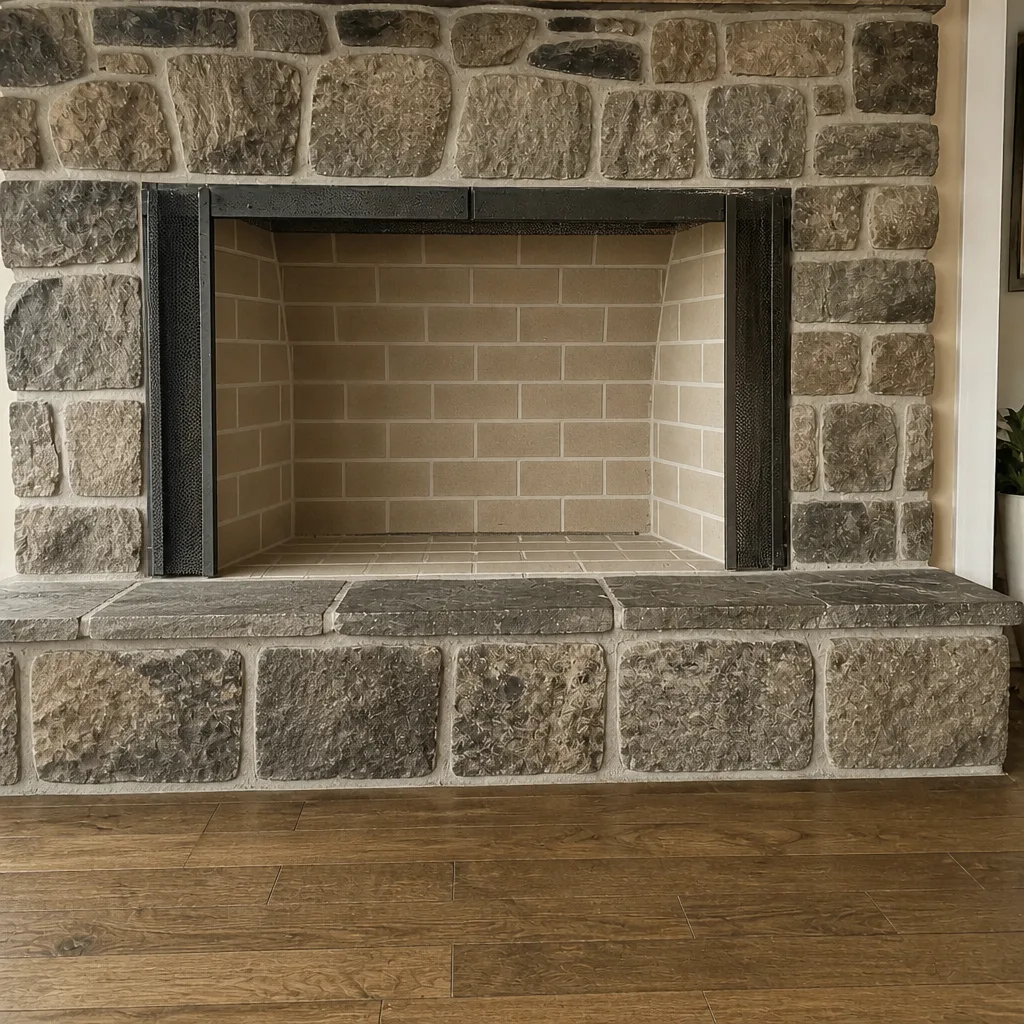
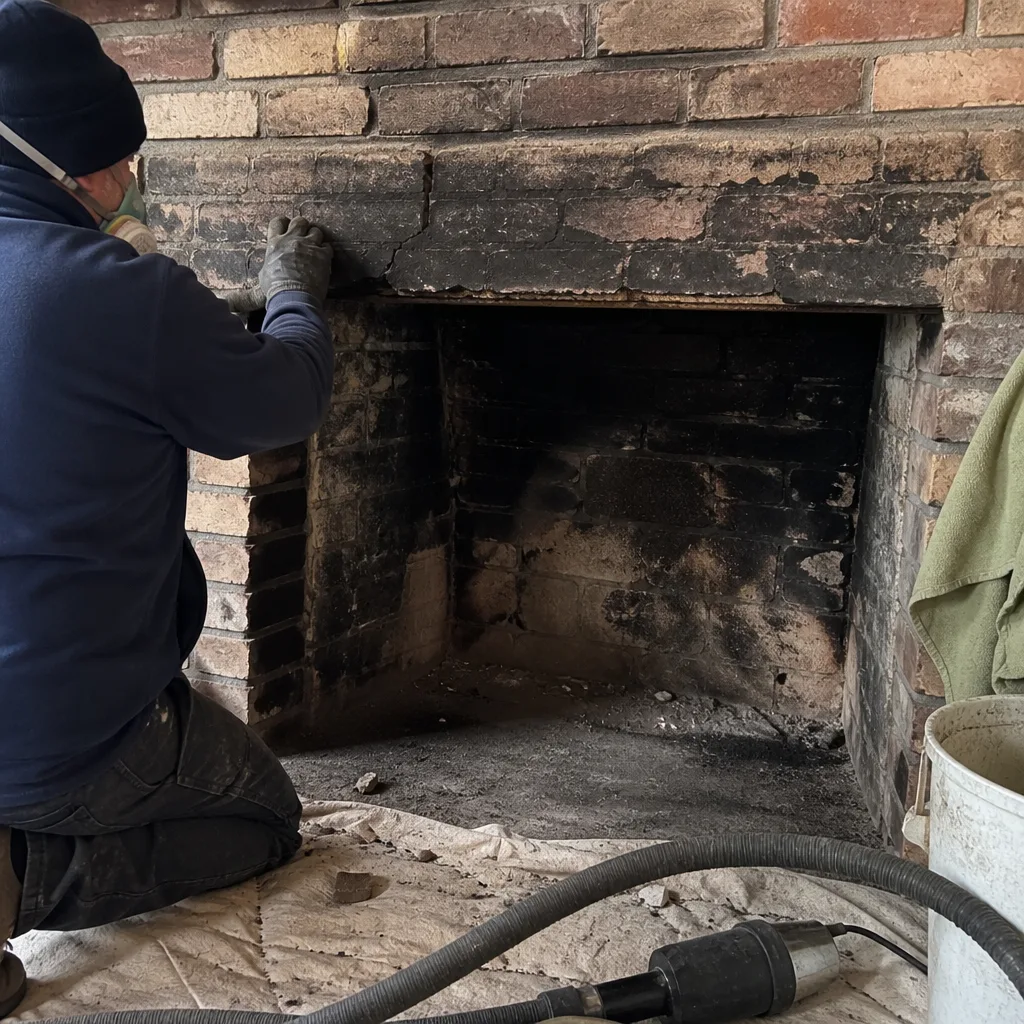
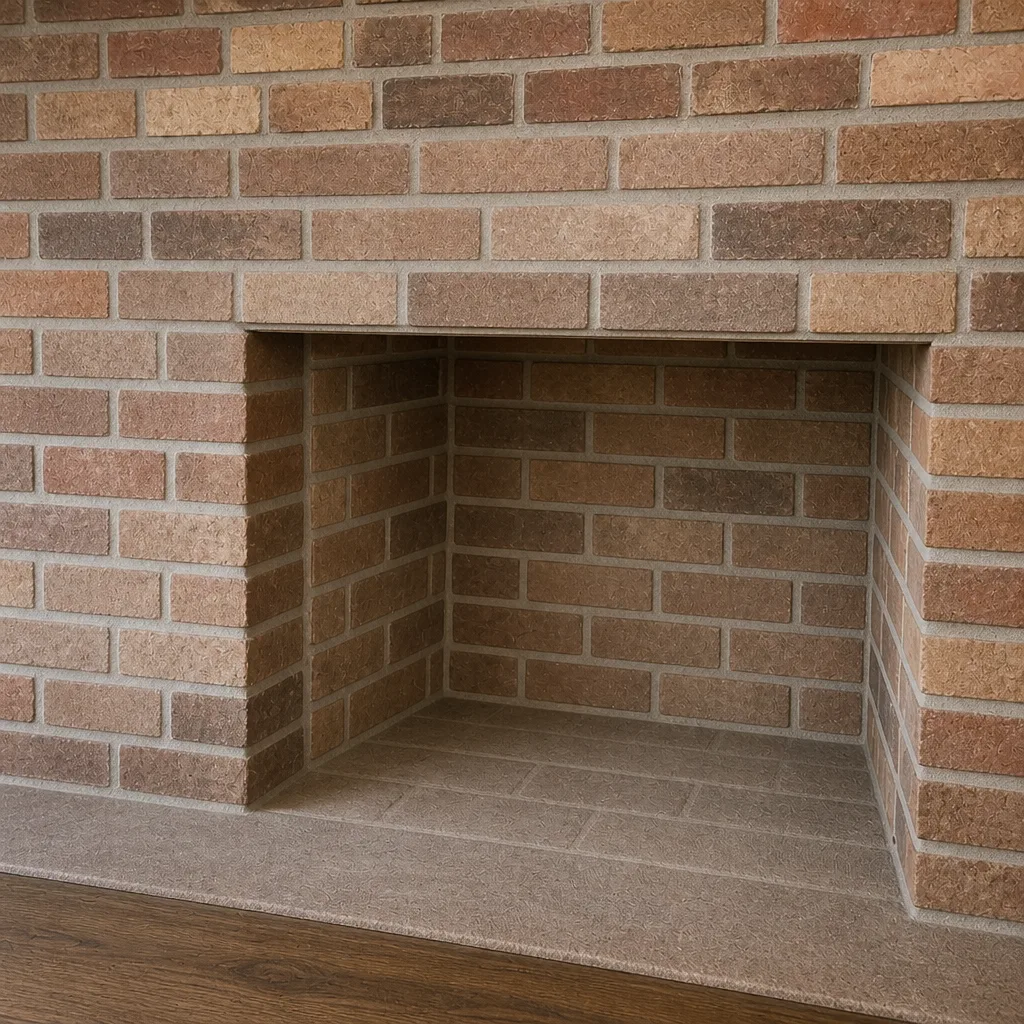
See the difference
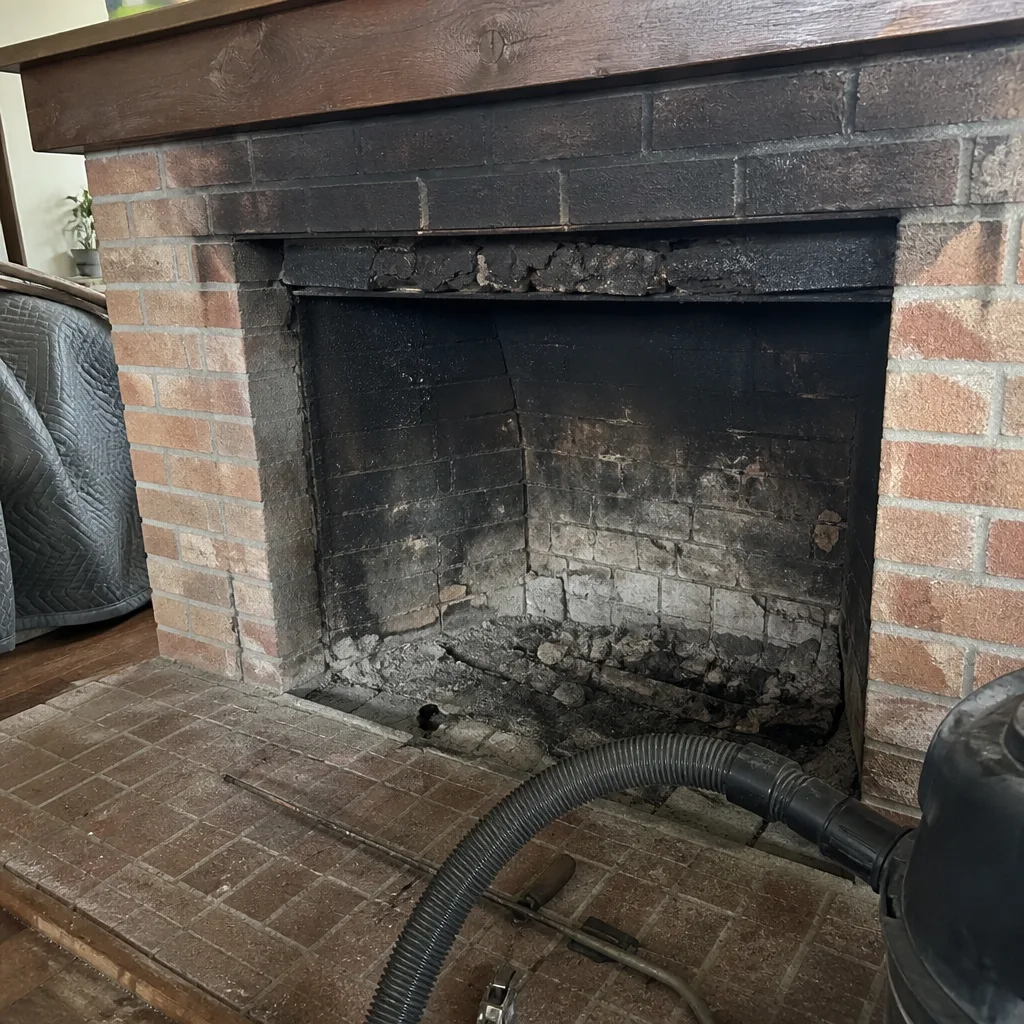 Before
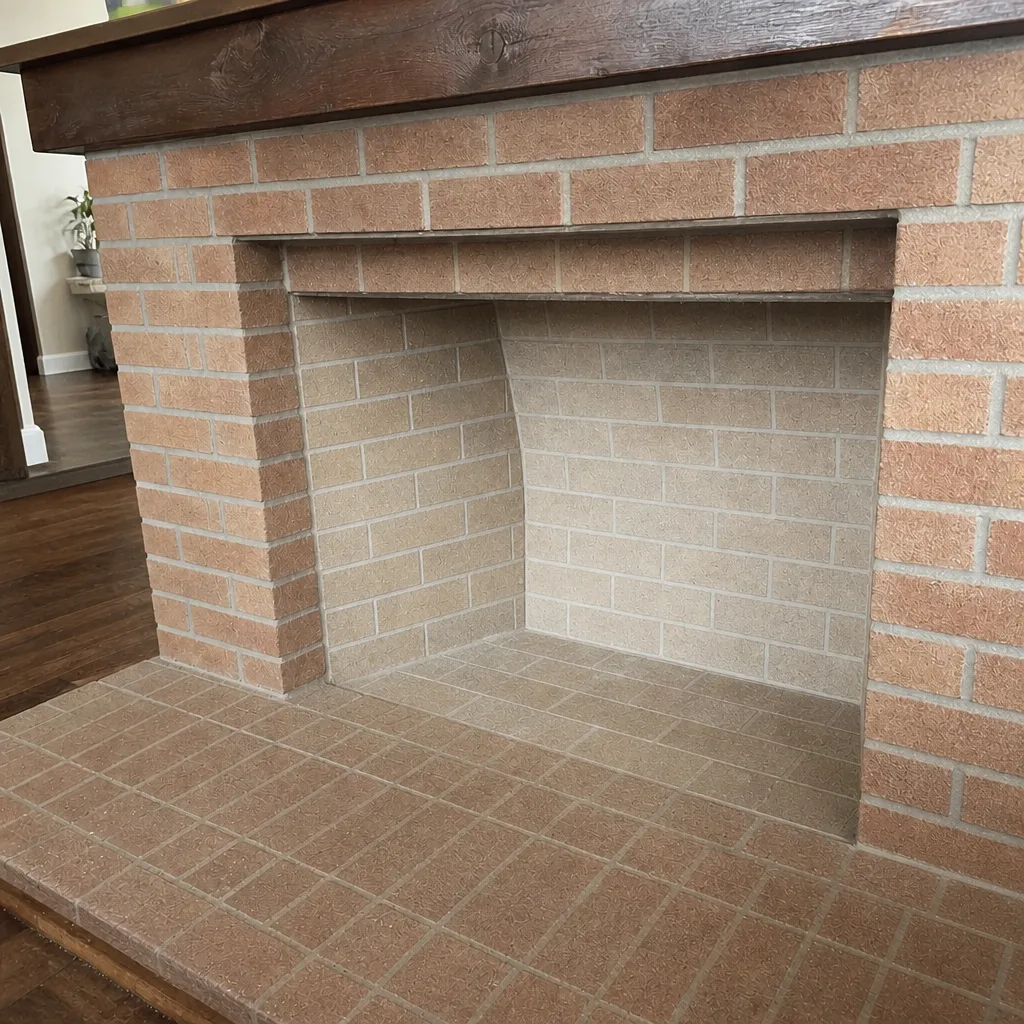 After
 Before
 After
 Before
 After
When to Call a Professional
Call a professional for any suspected chimney fire, any blockage you can’t see and clear from the firebox, any CO alarm event, and any smoke spillage that recurs. Call for annual inspection on a schedule you actually keep. Call if you see cracked masonry, a damaged cap, or a crown that’s visibly degraded, and call before the first cold snap if you haven’t had an inspection this cycle. Chimney Sweep Green Lake offers free estimates in Green Lake. Call (877) 820-8284. We answer 24/7, and fast dispatch runs 7am to 7pm, Sunday through Friday. If you’re not sure whether an issue is an emergency, call anyway. We’ll tell you straight. If it can wait, we say so. If it can’t, we schedule a technician to assess it.
Frequently Asked Questions
Signs include a loud roar or popping from the flue, visible smoke or sparks from the chimney top, puffs of black smoke inside the firebox, and a strong, hot smell that lingers afterward. A slow, quiet chimney fire can leave few obvious signs and is often discovered during the next inspection. If you suspect one, treat it as real and call for an inspection. Call (877) 820-8284 for an exact quote on the inspection. Estimates are free.
Close the damper only if you can reach the control without opening the firebox doors. Cutting the air supply to the fire is the most effective thing you can do, but opening the doors to reach a damper feeds the fire oxygen and puts you near the flames. If you can’t reach it safely, leave the damper alone, close the glass doors, evacuate, and call 911. Call (877) 820-8284 after the fire department clears the scene to schedule a post-emergency inspection.
Yes. After any chimney fire, blockage, or CO event, a Level 2 inspection is the minimum. A Level 1 visual check can miss damage to the flue liner or the firebox that only a camera inspection reveals. Using the fireplace before the liner is confirmed intact can turn a repair into a second emergency. Call (877) 820-8284 and we’ll explain what the inspection covers before you book.
Get everyone out of the house and call 911 immediately. Don’t try to air out the house first or check the fireplace yourself. Once the fire department clears the scene, stop using the fireplace and schedule an inspection before any further burning. Carbon monoxide is a real medical emergency, and a CO event means the draft failed for a reason. Call (877) 820-8284 after the emergency is cleared to book the inspection. Estimates are free.
Once a year is the standard, and every chimney should be inspected annually regardless of whether it needs sweeping that year. Homes that burn heavily, or burn a lot of less-seasoned wood, sometimes need sweeping more often. The greenest approach is to have the inspection tell you what’s actually needed instead of guessing. Call (877) 820-8284 to schedule an inspection and sweep in Green Lake. Estimates are free.
Most policies cover damage from a chimney fire or a sudden blockage if the claim is documented, but coverage varies and some policies exclude specific chimney repairs. Your best protection is a written inspection report with photos and a clear timeline of the event. Call (877) 820-8284 and we’ll produce the documentation your adjuster will need. Estimates are free, and we can work with your insurer on the technical side of the report.
The Bottom Line
Chimney emergencies in Green Lake follow a predictable sequence: skipped inspection, missed sweeping, a cap in disrepair, or a liner that’s silently deteriorated. Every step in that sequence is interruptible at the maintenance stage. Prevention is annual inspection, sweeping when the inspection calls for it, and a cap and crown that are doing their job. Response, if something does happen, is close the doors, evacuate, call 911, then a Level 2 inspection before the fireplace is used again. The documentation to have ready for an adjuster is your inspection report, your photos, and your timeline. Know the sequence, and you can break it before it breaks anything else.
One more thing worth repeating: the same specialist should handle both the routine maintenance and the repair work that follows. That’s what we mean by your chimney’s first and last call. We cover inspection, sweeping, cap and crown, fireplace repair, and chimney repair, and we don’t refer out the structural jobs. From annual inspection to full flue restoration, it’s the same company from the first visit to the last repair.
If you’re not sure whether your chimney is ready for this winter, call us at (877) 820-8284 for a free estimate. We answer 24/7. Fast dispatch from 7am to 7pm, Sunday through Friday. A sweep is booked ahead of time, and the estimate sets the price up front. Nothing is recommended without camera evidence you can see yourself, and if work can safely wait, we’ll tell you that too.
Written by the team at Chimney Sweep Green Lake.